AI personalization creates outreach tailored to each prospect's business context, while template-based outreach sends largely identical messages with minimal customization. Although templates are fast to deploy, AI personalization delivers greater relevance, stronger engagement, and higher reply rates by incorporating company-specific insights, buyer intent signals, and real-time business data.
The best outbound strategy isn't simply sending more emails—it's sending emails that immediately answer the question: "Why is this relevant to me?"
Prospect signals are real-time indicators that reveal what a potential customer is doing, planning, or prioritizing. By using AI to identify and interpret these signals, businesses can personalize outreach based on genuine business context rather than guesswork. The most effective outreach connects a relevant signal to a specific business challenge and explains how your solution can help.
Prospect signals help answer one critical question before sending an email: "Why should this person care about hearing from us today?"
AI personalization increases cold email reply rates because it makes outreach more relevant, timely, and valuable. Instead of sending the same message to every prospect, AI uses business context, buyer intent, and company-specific insights to explain why the email matters. When recipients immediately see relevance, they are more likely to engage and respond.
The goal of AI personalization is not to make emails sound automated—it is to make every message feel like it was written with a clear understanding of the recipient's business.
AI should use accurate, relevant, and ethically sourced data to personalize outbound outreach. The most effective personalization combines firmographic data, role-specific insights, behavioral signals, and publicly available business information while avoiding sensitive or intrusive personal details. High-quality data improves response rates, builds trust, and ensures AI-generated outreach remains relevant rather than generic.
Businesses that use AI for outbound sales achieve the best results when personalization is based on genuine business context instead of superficial details. AI should help answer one question: "Why is this message relevant to this specific person, right now?"
Scaling personalized outreach does not require hiring more Sales Development Representatives (SDRs). By combining AI with workflow automation, businesses can automate prospect research, lead qualification, personalized messaging, follow-ups, and meeting scheduling while maintaining a relevant and consistent buyer experience. Human sales teams can then focus on building relationships and closing opportunities instead of repetitive administrative tasks.
Personalization and relevance are often used interchangeably, but they are not the same. Personalization tailors a message to a specific person using identifiable details, while relevance ensures the message addresses the prospect's current business priorities, challenges, or goals. The most effective AI-powered outbound combines both to create meaningful sales conversations.
Generic AI outreach fails because it prioritises scale over relevance. Prospects are unlikely to engage with emails that feel automated, lack business context, or offer little personalised value. The most successful AI-powered outbound strategies combine automation with prospect research, contextual messaging, and human oversight to create outreach that is timely, relevant, and genuinely useful.
AI generates personalized cold emails by combining prospect research, publicly available business data, and natural language generation to create relevant outreach at scale. Instead of relying on generic templates, AI tailors each email using insights such as company growth, hiring activity, funding announcements, technology adoption, and industry trends, helping sales teams deliver more meaningful outreach while reducing manual effort.
Hyper-personalized outbound is a sales strategy that uses AI, automation, and prospect-specific insights to create highly relevant outreach for every potential customer. Rather than relying on generic email templates or simple name personalization, hyper-personalized outbound references real business context—such as company growth, recent funding, hiring activity, technology adoption, or industry challenges—to deliver messages that are timely and meaningful.
Sending more emails rarely leads to better sales outcomes. What consistently improves pipeline generation is automating the entire sales workflow—from prospect research and lead qualification to follow-ups and meeting scheduling. AI workflow automation ensures every prospect receives relevant, timely communication while freeing sales teams to focus on high-value conversations.
AI enables sales teams to research thousands of prospects in minutes by automatically collecting, analysing, and summarising publicly available business information. Instead of manually reviewing websites, LinkedIn profiles, news articles, and company reports, AI builds comprehensive prospect profiles that power more personalised outreach and faster sales cycles.
AI SDR workflows help SaaS companies automate prospecting, lead qualification, outreach, follow-ups, and meeting scheduling while allowing human sales representatives to focus on high-value conversations. The most effective workflows combine AI automation with human oversight, resulting in faster response times, improved lead quality, and higher sales productivity.
An end-to-end AI prospecting workflow automates the entire sales prospecting process, from identifying ideal prospects to qualifying leads and booking meetings. By combining AI-powered research, personalization, outreach, follow-up, and CRM management, businesses can generate more qualified conversations while reducing manual effort. The most effective workflows still include human oversight for strategy, relationship-building, and closing deals.
AI can qualify leads automatically by analyzing customer behavior, scoring prospects based on predefined criteria, and routing high-quality opportunities to your sales team in real time. This reduces manual work, improves response times, and helps businesses focus on leads that are most likely to convert.
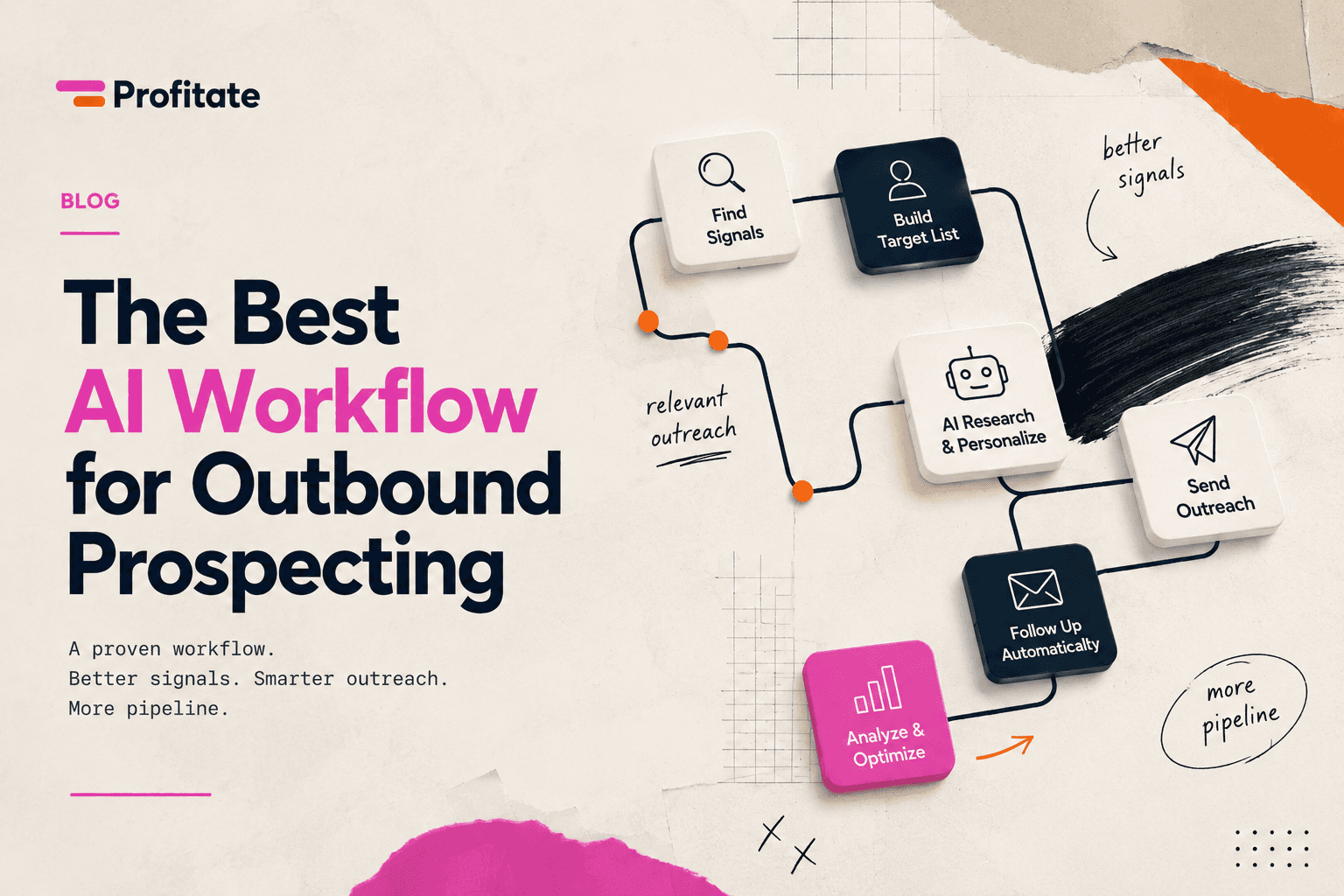
The best AI workflow for outbound prospecting combines ideal customer profile (ICP) targeting, buyer signal detection, account research, contact enrichment, AI-generated messaging, automated sequencing, and human qualification. The goal is not to automate more outreach. The goal is to identify the right prospects at the right time with the right message.
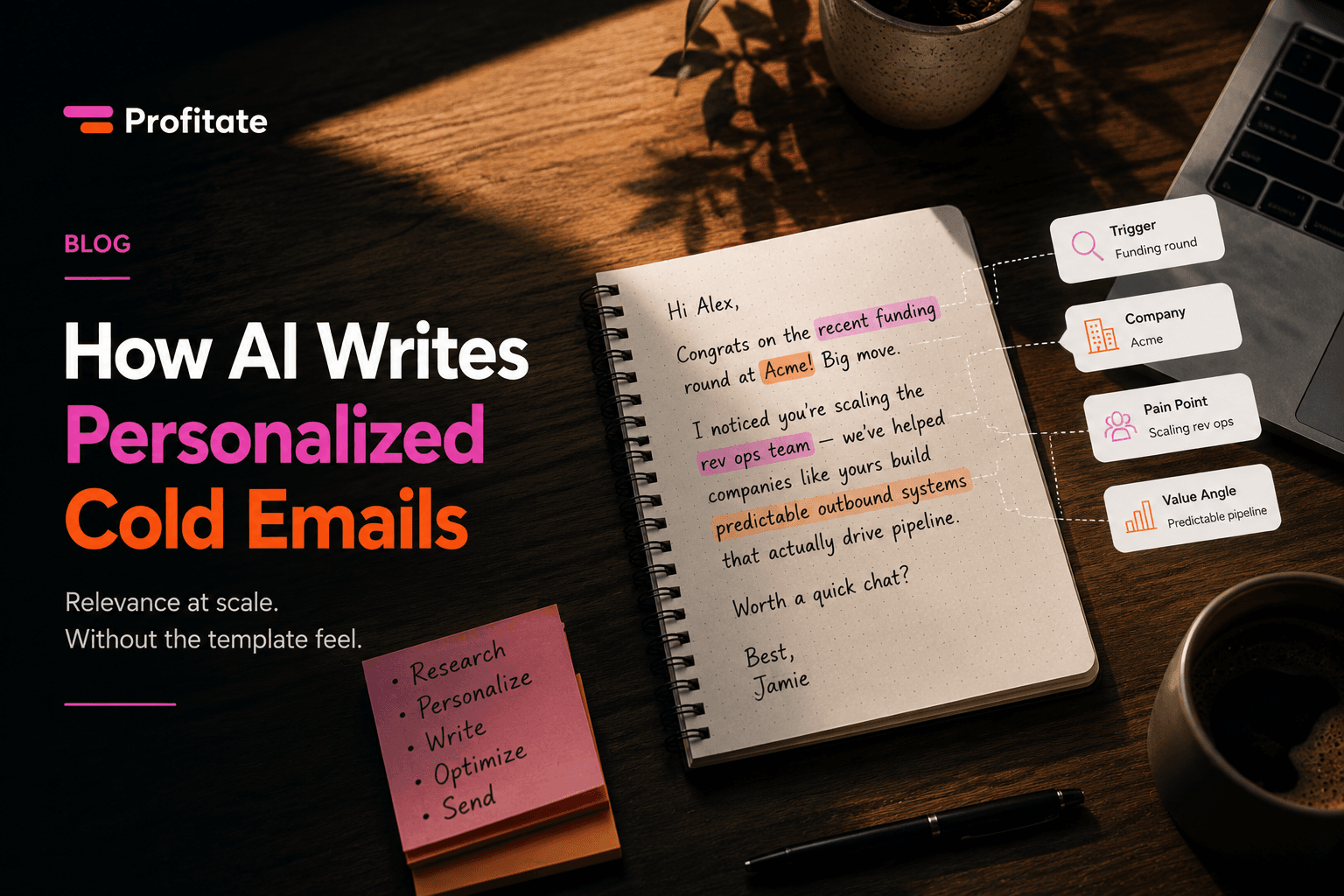
AI writes personalized cold emails by combining account data, buyer signals, company research, and proven messaging frameworks. Instead of simply inserting a prospect's name or company, modern AI systems identify why a prospect may need a solution now and generate outreach based on relevant business context.
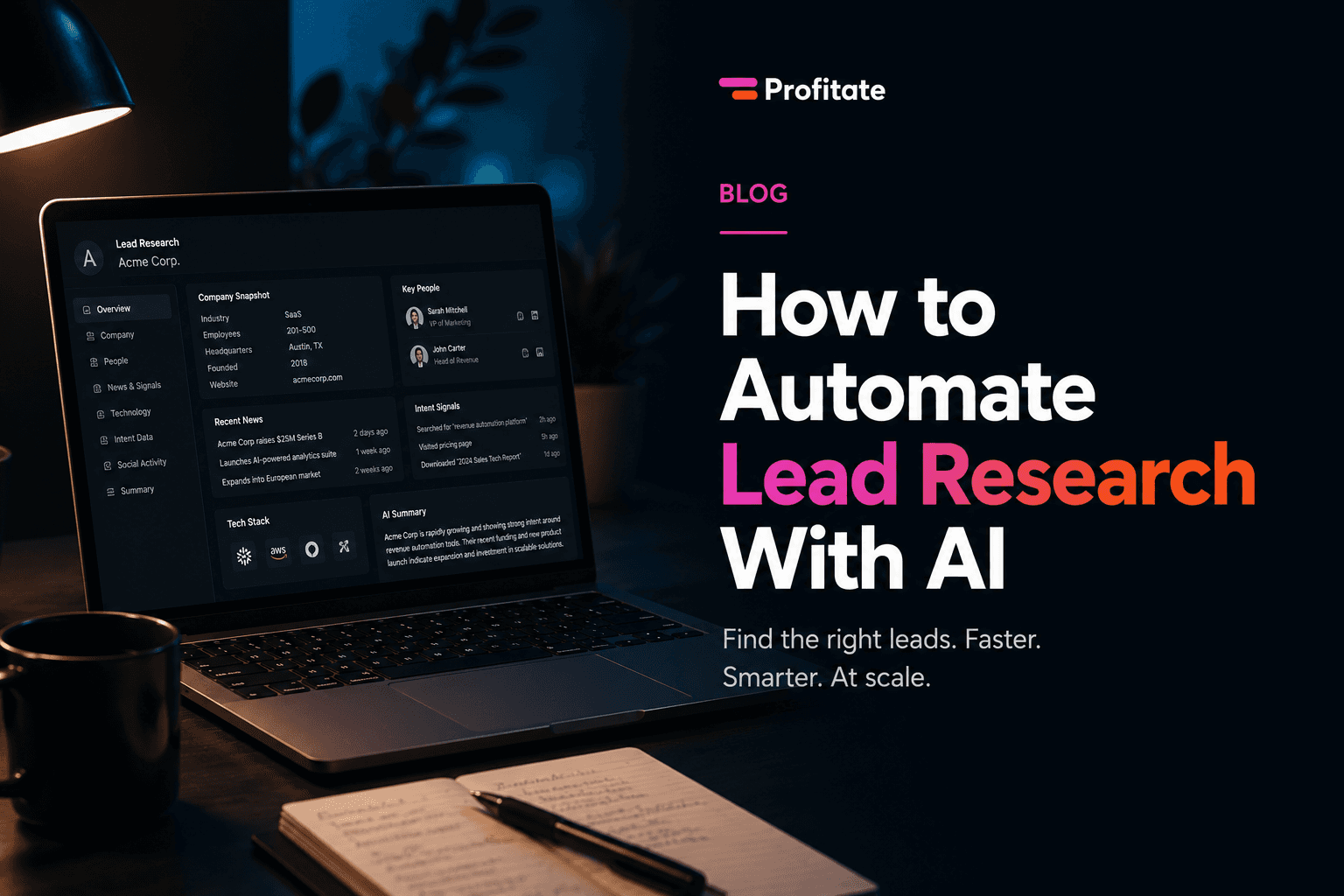
AI automates lead research by collecting company data, identifying buyer signals, enriching contact information, summarising account insights, and generating prospecting recommendations. Instead of manually researching every prospect, sales teams can use AI to identify high-potential accounts, understand why they may be ready to buy, and personalise outreach at scale.
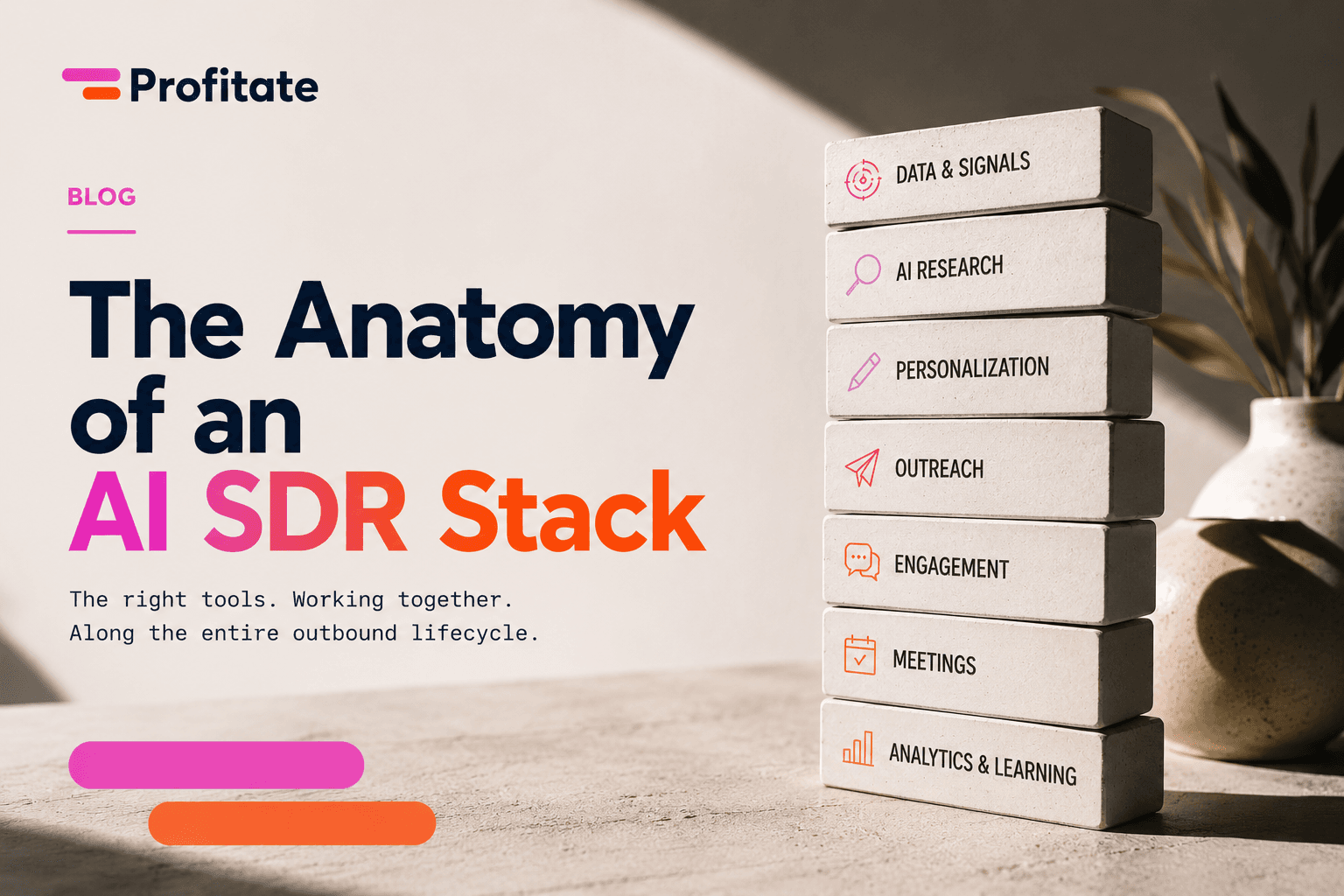
An AI SDR stack is the set of tools, data, workflows, and rules that help sales teams automate outbound prospecting. A strong stack includes account data, buyer signals, contact enrichment, AI research, message generation, sequencing, reply handling, CRM routing, analytics, and human oversight.
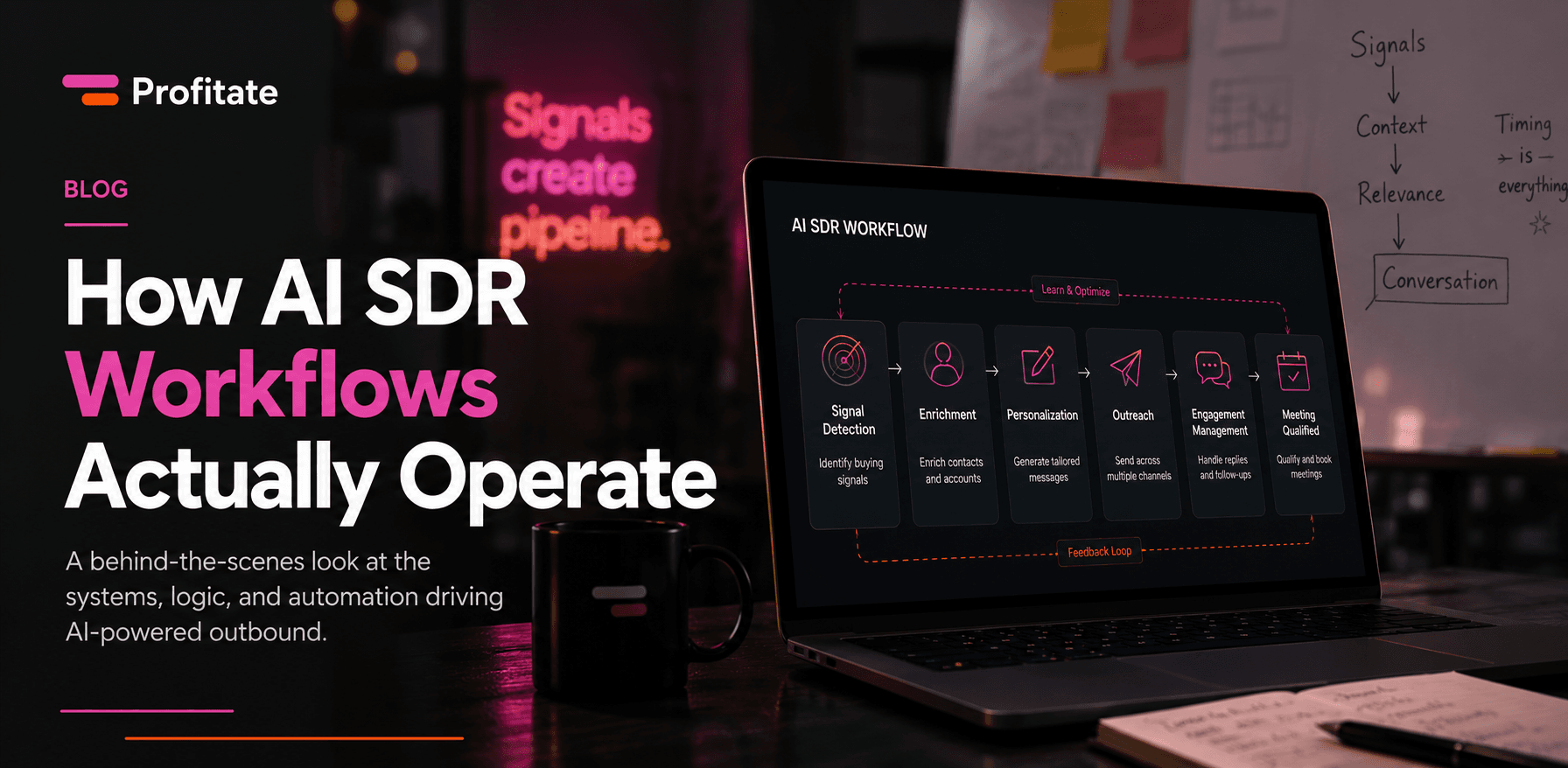
AI SDR workflows operate by combining buyer signals, account data, enrichment, automated research, message generation, sequencing, reply handling, and human approval. The best systems do not simply “send automated emails.” They identify the right accounts, understand why now is a good time to reach out, create relevant messaging, and route high-intent replies to salespeople.
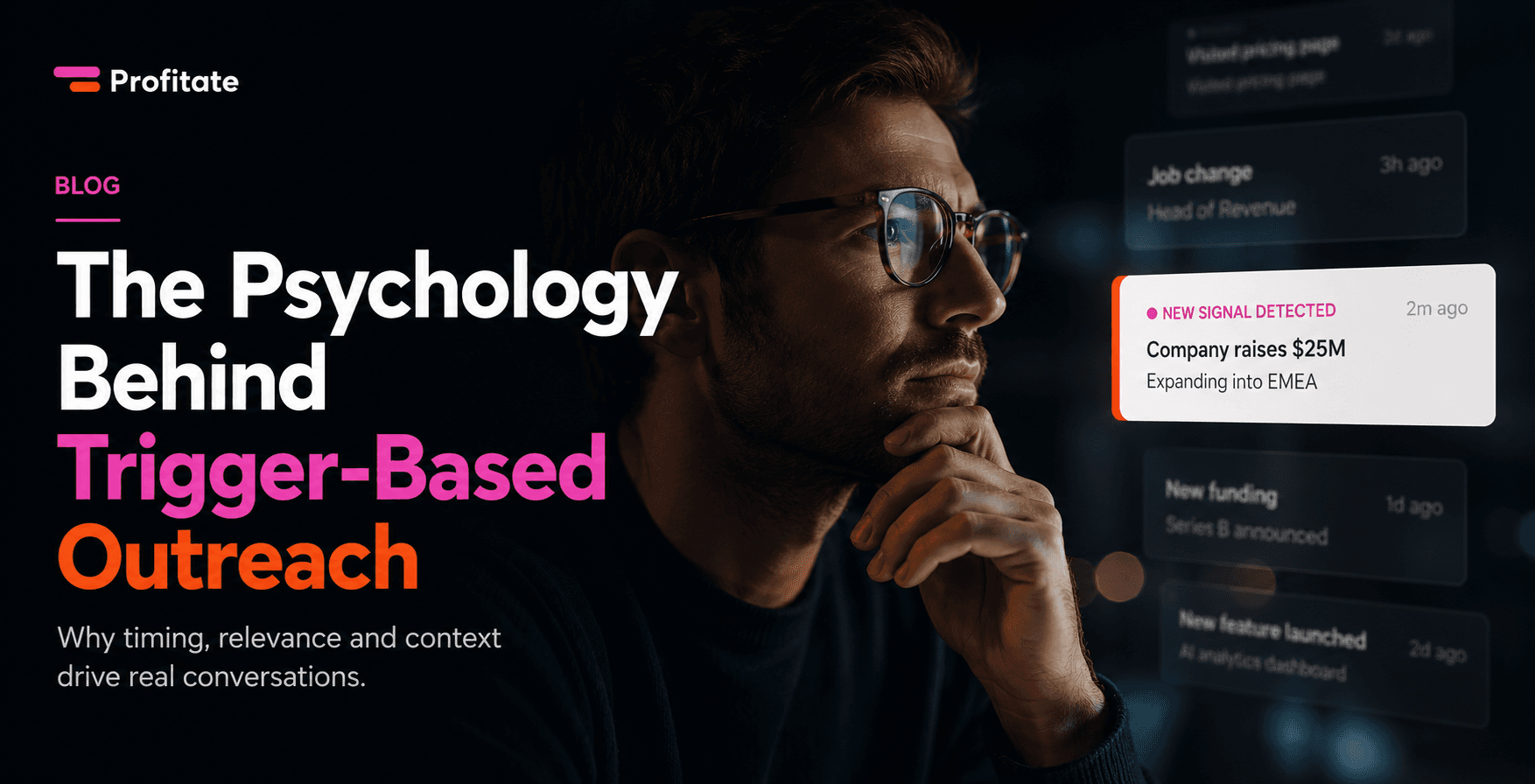
Trigger-based outreach works because it aligns sales messaging with a prospect’s current context, priorities, and mental availability. Instead of interrupting someone with a generic pitch, it uses a relevant business event—such as hiring, funding, leadership change, website activity, or expansion—to make the message feel timely, specific, and worth considering.