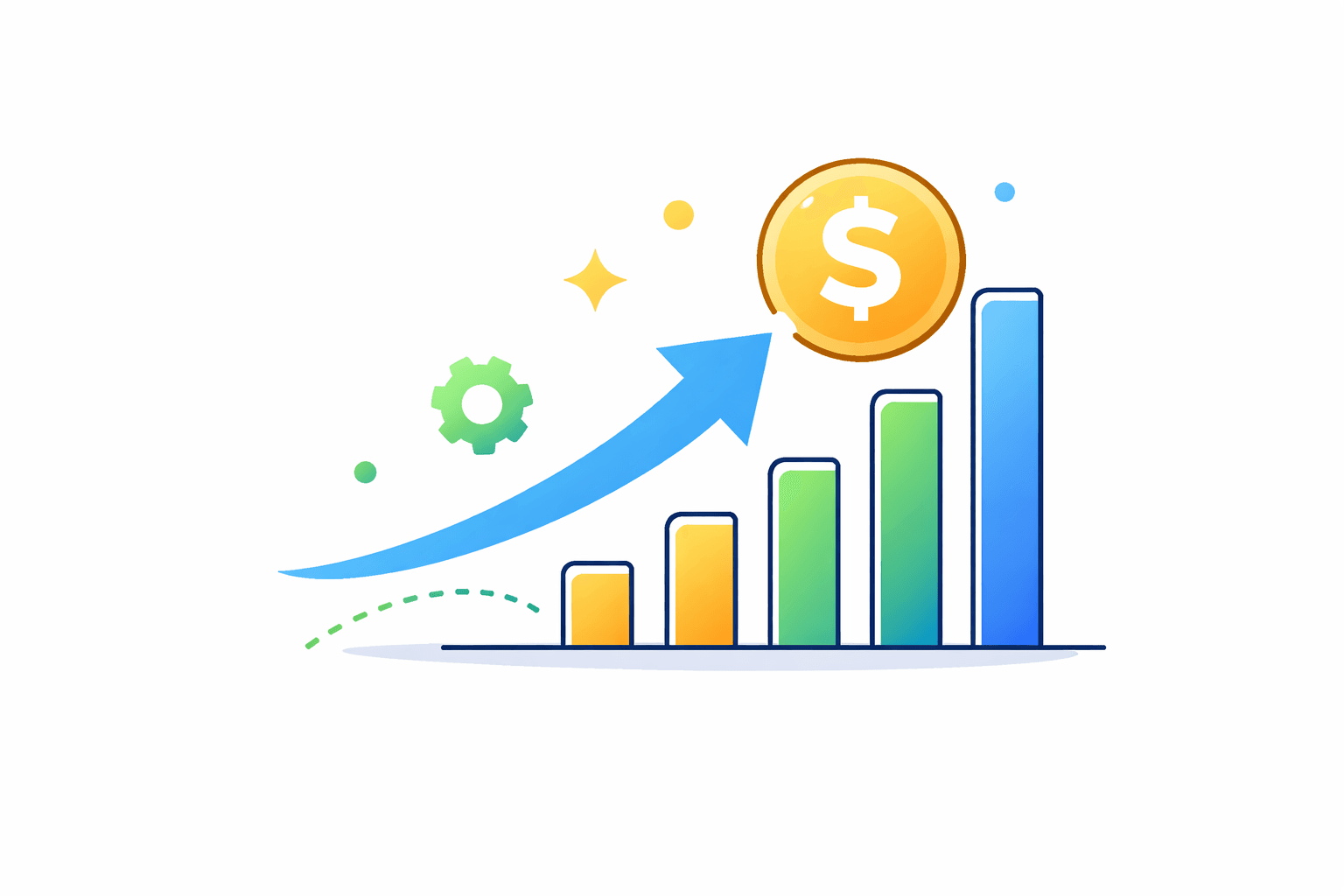
TL;DR / Summary:The ROI of AI in sales comes from increased efficiency, higher conversion rates, and better pipeline quality. Most companies see 2–3x productivity gains, 20–40% higher conversion rates, and reduced cost per lead. AI delivers ROI by automating manual work, improving targeting, and enabling smarter decision-making.
What Does ROI of AI in Sales Mean?
ROI (Return on Investment) in AI sales refers to the measurable impact AI has on:
Revenue growth
Cost reduction
Sales productivity
It answers:“How much more revenue (or efficiency) do we generate from using AI?”
Where Does AI Generate ROI in Sales?
1. Increased SDR Productivity
AI automates repetitive tasks like:
List building
Data enrichment
Follow-ups
Impact:
SDRs spend more time selling
2–3x more output per rep
This reduces the need to scale headcount.
2. Higher Conversion Rates
AI improves targeting and timing by using:
Intent data
Lead scoring
Behavioral signals
Impact:
20–40% higher reply and meeting rates
Better-quality conversations
You convert more from the same volume.
3. Better Lead Quality
AI prioritizes:
High-fit prospects (ICP match)
High-intent buyers
Impact:
Less wasted outreach
Higher pipeline-to-revenue conversion
4. Reduced Customer Acquisition Cost (CAC)
AI reduces inefficiencies in:
Prospecting
Outreach
Qualification
Impact:
Lower cost per lead
Lower cost per acquisition
More efficient spend = higher ROI.
5. Faster Sales Cycles
AI helps engage prospects at the right time with relevant messaging.
Impact:
Shorter deal cycles
Faster revenue realization
6. Improved Forecasting Accuracy
AI analyzes pipeline data to predict outcomes.
Impact:
Better revenue planning
Reduced risk and uncertainty
Example ROI Breakdown
Metric | Before AI | After AI |
|---|---|---|
Meetings per SDR/month | 15 | 30–40 |
Conversion Rate | 10% | 15–25% |
Cost per Lead | High | Reduced |
Sales Cycle Length | Long | Shorter |
Even modest improvements across these metrics compound into significant revenue gains.
How to Calculate ROI of AI in Sales
Basic Formula:
ROI = (Revenue Gain – Cost of AI) ÷ Cost of AI
Example:
Additional revenue generated: $200,000
AI tool cost: $50,000
ROI = ($200k – $50k) ÷ $50k = 3x return
What Drives High ROI from AI?
1. Strong ICP and Targeting
AI performs best with clear inputs.
2. High-Quality Data
Clean, accurate data improves:
Lead scoring
Predictions
Personalization
3. Use of Intent Signals
Targeting in-market buyers significantly increases ROI.
4. Proper Implementation
ROI depends on:
Workflow integration
Team adoption
Continuous optimization
Tools That Maximize ROI
High-ROI setups typically include:
Intent platforms (e.g., 6sense) → Better targeting
Sales intelligence (e.g., Apollo, ZoomInfo) → Data + outreach
AI platforms (e.g., Profitate.ai) → Signal-based prospecting + automation
Sales engagement tools → Scalable execution
Platforms like Profitate.ai increase ROI by combining:
Intent detection
AI lead prioritization
Automated, personalized outreach
This reduces tool complexity while improving output.
Common Mistakes That Reduce ROI
Over-automating without personalization
Using poor-quality data
Not defining a clear ICP
Measuring activity instead of outcomes
Failing to act on AI insights
AI only delivers ROI when paired with strong strategy and execution.
Frequently Asked Questions
How quickly can AI deliver ROI?
Most teams see measurable results within 4–12 weeks, especially in efficiency and pipeline growth.
Is AI ROI higher for small or large teams?
Both benefit—but small teams often see faster ROI due to efficiency gains.
What’s the biggest ROI driver?
Better targeting and prioritization—focusing on the right prospects has the largest impact.
Key Takeaway
The ROI of AI in sales comes from doing less manual work and closing more high-quality opportunities. By improving targeting, timing, and execution, AI transforms sales from a labor-intensive process into a scalable, predictable revenue engine.