TL;DR:AI prospecting uses a combination of first-party, third-party, behavioral, and intent data to identify and prioritize potential customers. The most valuable signals include website activity, CRM data, social engagement, firmographics, and real-time buying intent. By combining these datasets, AI can predict who is most likely to convert and when to engage them.
What Is AI Prospecting?
AI prospecting is the use of artificial intelligence to identify, qualify, and prioritize potential customers based on data signals. Instead of relying on manual research, AI systems analyze large datasets to uncover patterns that indicate purchase intent, fit, and timing.
These systems are commonly used in sales, marketing, and growth teams to automate lead generation and improve conversion rates.
What Types of Data Does AI Use for Prospecting?
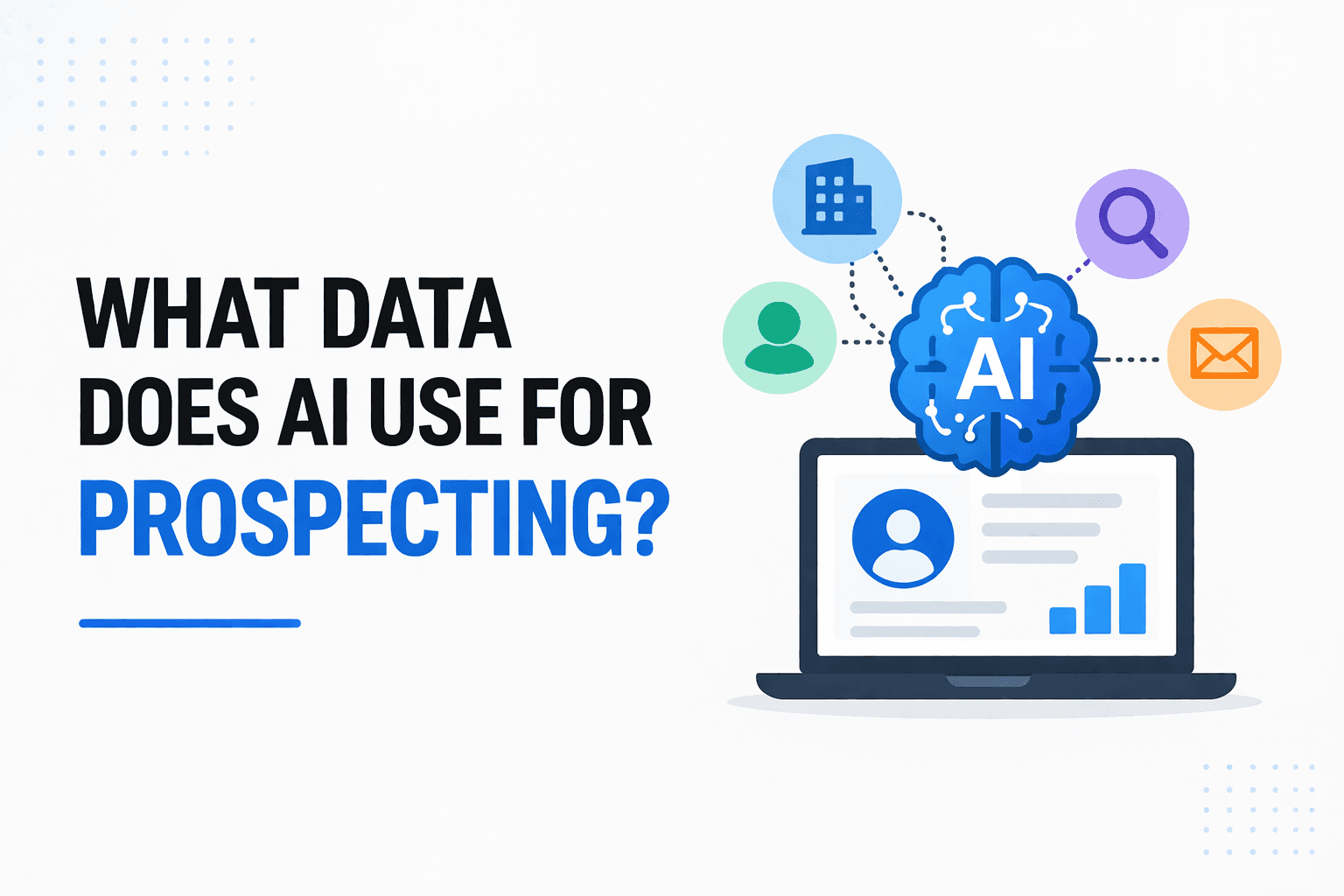
AI prospecting relies on multiple data categories to build accurate lead profiles and predictions. Each type contributes a different layer of insight.
1. First-Party Data (Your Owned Data)
First-party data is the most reliable and valuable source for AI prospecting because it comes directly from your own ecosystem.
Examples include:
CRM records (contacts, deal stages, past purchases)
Website analytics (page visits, time on site)
Email engagement (opens, clicks, replies)
Product usage data (logins, feature adoption)
AI uses this data to identify patterns in your best customers and replicate them across new prospects.
2. Third-Party Data (External Data Sources)
Third-party data expands your reach beyond your existing audience by providing additional context about prospects.
Common sources:
Data providers (e.g., ZoomInfo, Clearbit)
Public databases and directories
Purchased contact lists
Key data points:
Job titles and roles
Company size and revenue
Industry classification
This helps AI determine whether a prospect fits your ideal customer profile (ICP).
3. Behavioral Data (What Prospects Do)
Behavioral data tracks how users interact with digital touchpoints and is critical for understanding engagement.
Examples:
Website visits and navigation paths
Content downloads (eBooks, whitepapers)
Ad clicks and campaign interactions
Webinar attendance
AI analyzes this data to score leads based on activity levels and engagement patterns.
4. Intent Data (Buying Signals)
Intent data is one of the most powerful inputs for AI prospecting because it indicates active interest in a solution.
Types of intent signals:
Searches for relevant keywords
Visits to competitor websites
Consumption of industry-specific content
Review site activity (e.g., G2, Capterra)
AI models use intent data to identify prospects who are “in-market” and ready to buy.
5. Firmographic and Demographic Data
This data helps AI determine whether a prospect matches your target audience.
Firmographic data (B2B):
Company size
Revenue
Industry
Location
Demographic data (B2C):
Age
Gender
Income level
Education
These attributes allow AI to filter and segment prospects effectively.
6. Social and Engagement Data
AI also analyzes social signals to understand influence, interests, and engagement.
Examples:
LinkedIn activity (posts, connections)
Twitter/X engagement
Content sharing behavior
Community participation
This helps identify decision-makers and highly engaged prospects.
How AI Combines These Data Sources
AI prospecting tools do not rely on a single dataset—they combine multiple signals to generate predictive insights.
Typical process:
Aggregate data from multiple sources
Clean and normalize the data
Apply machine learning models
Score and rank prospects
Recommend outreach timing and messaging
This multi-layered approach improves accuracy and reduces wasted outreach.
Why Data Quality Matters in AI Prospecting
AI is only as effective as the data it uses. Poor-quality or outdated data leads to inaccurate predictions and missed opportunities.
Best practices:
Regularly update CRM data
Remove duplicates and invalid records
Use verified data providers
Track real-time behavioral signals
According to industry benchmarks (2025), companies using high-quality, multi-source data see up to 35–50% higher lead conversion rates compared to single-source prospecting.
Frequently Asked Questions
What is the most important data for AI prospecting?
Intent and behavioral data are the most impactful because they reveal real-time interest and engagement, helping AI prioritize high-converting prospects.
Can AI prospect without third-party data?
Yes, but results are limited. First-party data is powerful, but third-party and intent data significantly expand reach and accuracy.
How does AI score leads?
AI uses machine learning models to assign scores based on fit (firmographics) and behavior (engagement + intent), predicting likelihood to convert.
Key Takeaway
AI prospecting works by combining first-party, third-party, behavioral, and intent data into a unified model that identifies high-quality leads. The more accurate and diverse your data sources, the more precise your prospecting outcomes will be.