TL;DR / Summary:Yes—AI can significantly improve email personalisation by generating context-aware, relevant messaging at scale. It uses data like company activity, intent signals, and role-specific insights to tailor outreach automatically. The result is higher reply rates, better engagement, and faster pipeline generation without manual effort.
What Does AI Email Personalisation Mean?
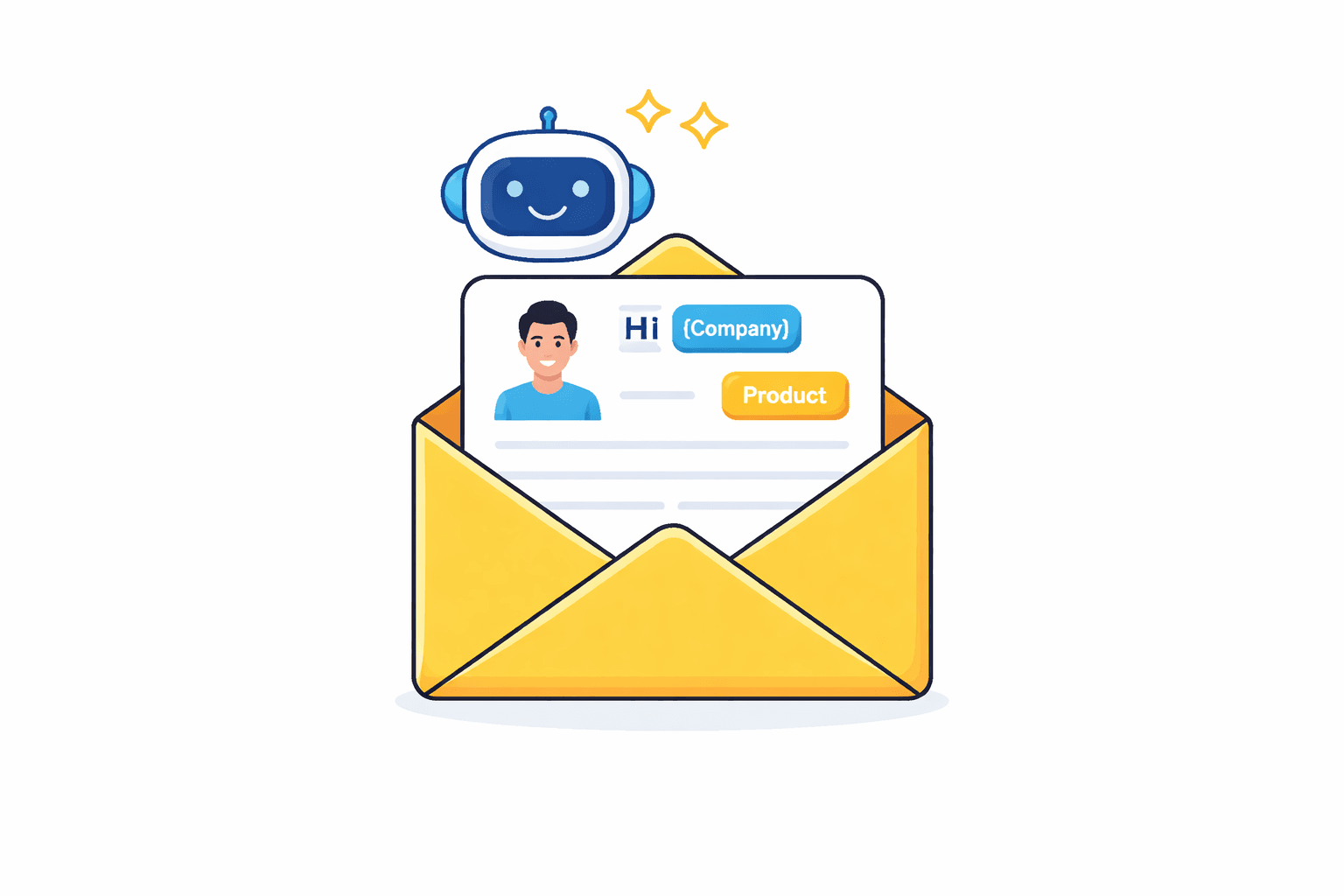
AI email personalisation is the use of artificial intelligence to create tailored outreach messages based on real data.
Instead of:
Generic templates
Manual research
AI enables:
Dynamic, context-driven messaging
Scalable personalisation
Faster outreach execution
It transforms email from mass messaging into targeted communication.
How Does AI Improve Email Personalisation?
AI enhances personalisation by combining data, automation, and pattern recognition.
1. Uses Real-Time Data for Context
AI pulls in relevant information such as:
Company news (funding, hiring, expansion)
Industry trends
Role-specific challenges
Example:
“Saw you’re hiring SDRs…”
“Noticed your recent funding round…”
This makes emails feel timely and relevant.
2. Generates Personalised Opening Lines
The first line is critical for engagement.
AI can:
Analyze company and prospect data
Create tailored intros automatically
This eliminates the need for manual research while maintaining quality.
3. Adapts Messaging by Role and Industry
AI tailors the message based on:
Job title (e.g., VP Sales vs Marketing Director)
Industry-specific pain points
Business model (SaaS, eCommerce, etc.)
This ensures messaging resonates with specific buyer priorities.
4. Incorporates Intent and Behavioral Signals
AI improves personalisation by using:
Website visits (pricing/demo pages)
Content engagement
Search behavior
Example:
“Saw your team has been exploring [topic]…”
This aligns outreach with buyer intent and timing.
5. Creates Variations for Testing and Optimization
AI can generate multiple versions of:
Subject lines
Value propositions
Calls-to-action
This allows teams to test and refine messaging quickly.
6. Scales Personalisation Across Large Volumes
Instead of writing each email manually, AI enables:
Hundreds of personalised emails per day
Consistent quality across campaigns
Faster execution
This solves the core challenge of scale vs relevance.
AI Personalisation vs Traditional Personalisation
Feature | Manual Personalisation | AI Personalisation |
|---|---|---|
Speed | Slow | Fast |
Scalability | Limited | High |
Consistency | Variable | Consistent |
Data Usage | Limited | Multi-source |
Effectiveness | High (but not scalable) | High + scalable |
AI combines the quality of personalization with the efficiency of automation.
How to Use AI for Email Personalisation (Step-by-Step)
Step 1: Define Your ICP and Segments
AI needs clear targeting inputs:
Industry
Role
Pain points
Step 2: Integrate Data Sources
Connect:
CRM data
Website behavior
Intent platforms
Step 3: Generate Personalised Openers
Use AI to create:
Contextual first lines
Company-specific references
Step 4: Use Modular Messaging Frameworks
Combine:
Personalised intro
Standardised value proposition
Clear CTA
Step 5: Test and Optimize
Track:
Reply rates
Engagement
Conversion rates
Refine messaging continuously.
Benefits of AI Email Personalisation
2–3x higher reply rates (common benchmark)
Reduced manual research time
Improved message relevance
Faster campaign execution
More scalable outbound efforts
AI allows teams to personalise without sacrificing efficiency.
Common Mistakes to Avoid
Over-relying on AI without human review
Using generic inputs (poor data = poor output)
Over-personalizing every line (not scalable)
Ignoring intent and timing signals
AI works best when combined with clear strategy and quality data.
Frequently Asked Questions
Is AI personalisation better than manual personalisation?
At scale, yes—AI delivers comparable quality with far greater efficiency.
Does AI make emails feel robotic?
Not if used correctly—good inputs produce natural, relevant messaging.
How quickly can results improve?
Many teams see improvements within days to weeks, especially in reply rates.
Key Takeaway
AI dramatically improves email personalisation by making it scalable, data-driven, and context-aware. Instead of choosing between quality and efficiency, you can achieve both—creating outreach that feels relevant to each prospect while operating at scale.