TL;DR / Summary:AI sales tools integrate with CRM systems by syncing data, automating workflows, and enriching customer records in real time. They connect via APIs to pull and push data—enabling lead scoring, intent tracking, and automated outreach directly within the CRM. This turns your CRM into a central, intelligent sales engine.
What Does CRM Integration with AI Tools Mean?
CRM integration means AI tools can:
Access and update customer data
Trigger actions based on behavior
Enhance records with insights
Instead of working in silos, AI tools and CRM systems operate as a connected ecosystem.
How Do AI Sales Tools Integrate with CRM?
1. Data Synchronization (Two-Way Sync)
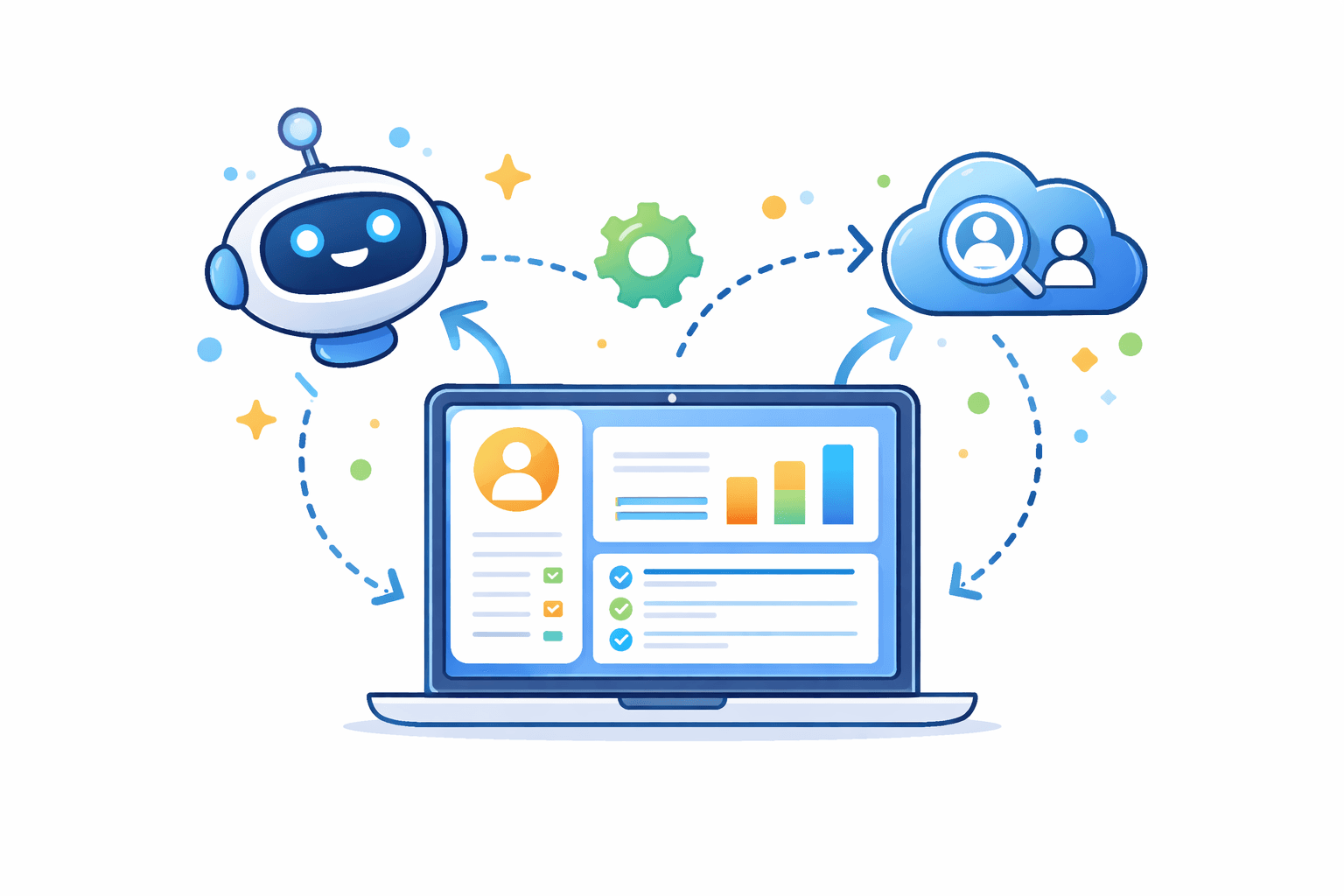
AI tools connect to your CRM (e.g., Salesforce, HubSpot) via APIs.
They:
Pull data → Leads, contacts, accounts, deal stages
Push data → Scores, insights, activity updates
This ensures both systems stay continuously updated.
2. Lead Enrichment and Data Enhancement
AI tools automatically enrich CRM records with:
Company data (industry, size, revenue)
Contact details (emails, roles)
Technographic insights
This improves data quality and eliminates manual updates.
3. AI Lead Scoring داخل CRM
AI tools assign scores directly within the CRM.
They evaluate:
ICP fit
Intent signals
Engagement behavior
This allows sales teams to prioritize leads without leaving the CRM.
4. Intent and Signal Tracking Integration
AI tools feed real-time signals into the CRM.
Examples:
Website visits (pricing/demo pages)
Content engagement
Third-party intent data
These signals appear as:
Alerts
Activity logs
Lead score updates
5. Workflow Automation and Triggers
AI tools automate actions based on CRM data.
Examples:
Assign leads to SDRs automatically
Trigger outreach sequences
Send alerts for high-intent activity
Platforms like Profitate.ai enhance this by:
Detecting real-time buying signals
Triggering outreach workflows automatically
Updating CRM records with intent insights
This creates a fully automated, signal-driven workflow.
6. Activity Tracking and Logging
All outreach and interactions are logged automatically.
Tracked activities:
Emails sent and opened
Calls and meetings
Sequence progress
This ensures complete visibility inside the CRM.
7. Pipeline and Forecasting Insights
AI tools analyze CRM data to provide:
Deal risk indicators
Pipeline health insights
Forecast predictions
These insights help teams make data-driven decisions.
What Does an Integrated Workflow Look Like?
AI identifies a high-intent prospect
Data is enriched and added to the CRM
Lead is scored automatically
CRM triggers an outreach sequence
Engagement data is tracked and updated
AI refines scoring based on behavior
Sales reps act on prioritized opportunities
This creates a closed-loop, intelligent sales system.
Benefits of AI + CRM Integration
Single source of truth for all sales data
Automated workflows reduce manual work
Better lead prioritization داخل CRM
Real-time insights for faster decisions
Improved data accuracy and completeness
It transforms the CRM from a database into a decision-making engine.
Common Integration Methods
Native Integrations
Built-in connections (e.g., HubSpot ↔ AI tools)
Fast and easy to set up
API Integrations
Custom connections between systems
More flexible and scalable
Middleware (iPaaS)
Tools like Zapier or Make
Connect multiple platforms without coding
Common Mistakes to Avoid
Not syncing data in real time
Poor data hygiene داخل CRM
Overloading CRM with irrelevant signals
Not aligning workflows with sales processes
Ignoring user adoption and training
Integration only works when it’s clean, structured, and actionable.
Frequently Asked Questions
Do AI tools replace a CRM?
No—AI enhances the CRM by adding intelligence and automation.
Is integration complex?
Most modern tools offer native integrations or simple API setups.
What is the biggest benefit?
Turning your CRM into a real-time, predictive sales system.
Key Takeaway
AI sales tools integrate with CRM systems to create a connected, automated, and intelligent sales workflow. By syncing data, enriching records, and triggering actions based on real-time signals, they transform your CRM from a passive database into an active driver of pipeline and revenue.