TL;DR / Summary:Yes—AI can predict buying behaviour with high probability (not certainty) by analyzing patterns in intent data, engagement signals, and historical conversions. It identifies which prospects are most likely to buy, when they’re likely to act, and what influences their decisions—helping sales teams prioritize and engage more effectively.
What Does “Predicting Buying Behaviour” Mean?
Predicting buying behaviour means using AI to forecast:
Which prospects are likely to convert
When they might enter a buying cycle
What actions indicate readiness
AI doesn’t guarantee outcomes—but it significantly improves decision-making and timing.
How Does AI Predict Buying Behaviour?
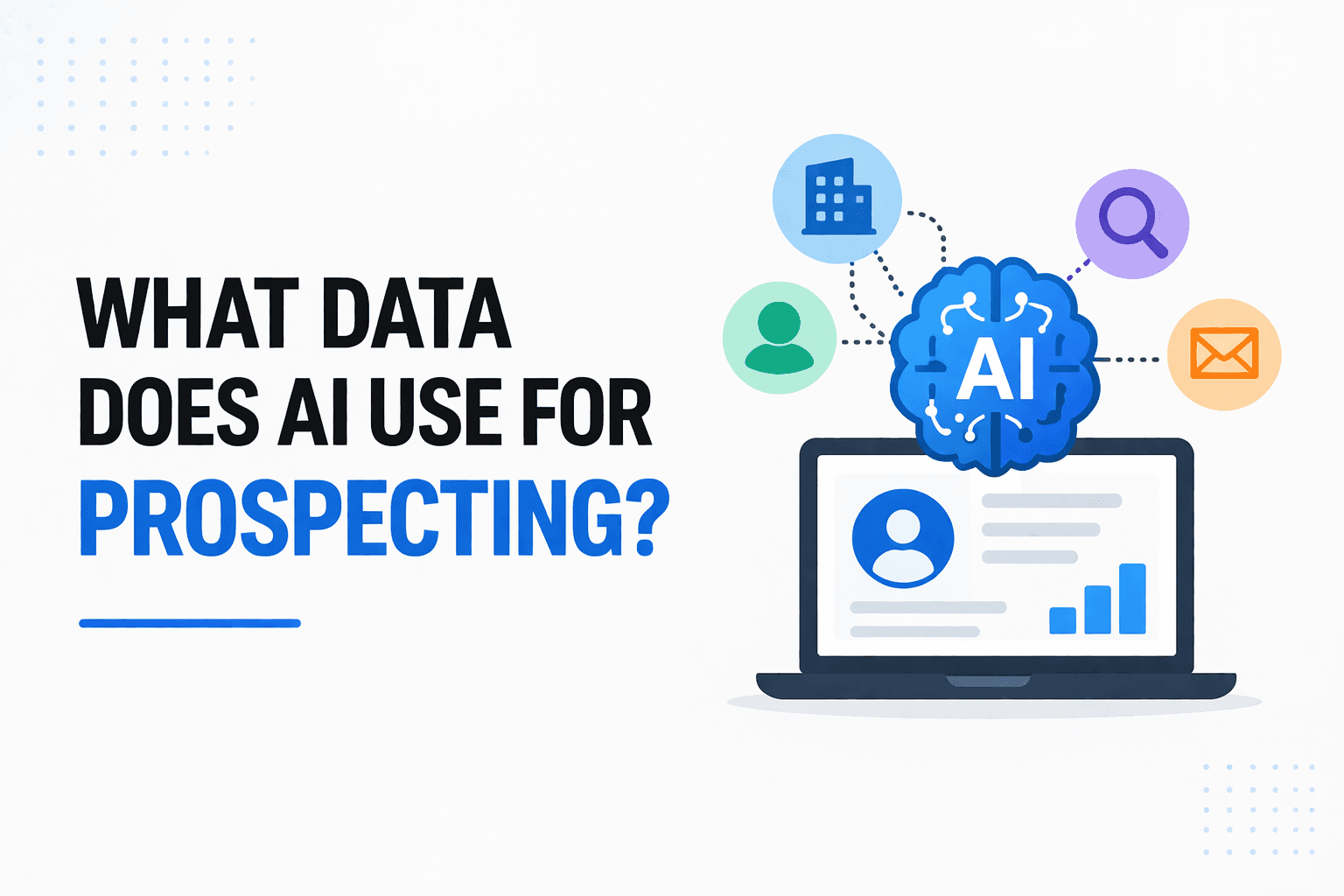
AI uses machine learning to analyze large datasets and detect patterns that humans can’t easily see.
1. Analyzing Historical Customer Data
AI learns from past deals to identify:
Common traits of customers who convert
Typical buying journeys
Key actions that lead to a sale
Example:If most buyers visited a pricing page before converting, AI learns this as a strong signal.
2. Tracking Real-Time Intent Signals
AI monitors behaviors that indicate active interest.
Examples:
Searching for product comparisons
Visiting pricing or demo pages
Engaging with product content
These signals suggest a prospect is entering or progressing through a buying cycle.
3. Evaluating Behavioral Engagement
AI analyzes how prospects interact with your brand.
Signals include:
Email opens and clicks
Website activity
Webinar attendance
Higher engagement often correlates with higher likelihood to buy.
4. Using Predictive Models
Machine learning models assign probabilities based on:
ICP fit
Intent signals
Engagement data
Each prospect is given a likelihood score, helping teams prioritize effectively.
5. Detecting Trigger Events
AI identifies external events that influence buying behavior.
Examples:
Funding announcements
Hiring for key roles
Market expansion
These events often signal new needs or budget availability.
How Accurate Is AI at Predicting Buying Behaviour?
AI is probabilistic, not deterministic.
Typical outcomes:
High-quality predictions for trend and likelihood
Less accurate for exact timing or individual decisions
Accuracy improves when:
Data is clean and comprehensive
Multiple signals overlap
Models are continuously updated
AI Prediction vs Human Intuition
Feature | Human Judgment | AI Prediction |
|---|---|---|
Data Processing | Limited | Large-scale |
Pattern Recognition | Experience-based | Data-driven |
Consistency | Variable | Consistent |
Accuracy | Moderate | Higher over time |
Scalability | Low | High |
AI enhances—not replaces—human judgment.
How Sales Teams Use AI Predictions
Prioritize High-Probability Leads
Focus on prospects most likely to convert.
Improve Timing of Outreach
Engage prospects when signals indicate buying readiness.
Personalize Messaging
Align outreach with:
What prospects are researching
What problems they are trying to solve
Forecast Revenue More Accurately
Use predictive insights to:
Estimate pipeline value
Identify risks early
Limitations of AI in Predicting Buying Behaviour
AI is powerful, but not perfect.
Limitations include:
Cannot account for all human factors (e.g., internal politics, emotions)
Dependent on data quality
May miss sudden, unpredictable changes
This is why human oversight remains critical.
Common Mistakes to Avoid
Treating predictions as certainty
Ignoring ICP fit and chasing all signals
Using incomplete or poor-quality data
Not acting quickly on insights
AI predictions are only valuable when paired with action.
Frequently Asked Questions
Can AI predict exactly who will buy?
No—AI predicts likelihood, not certainty.
What data is most important for prediction?
A combination of historical data, intent signals, and engagement behavior.
How quickly can AI improve predictions?
Most systems improve within weeks to months as more data is collected.
Key Takeaway
AI can predict buying behaviour by turning data into probability-based insights. While it can’t guarantee outcomes, it significantly improves your ability to identify high-intent prospects, engage at the right time, and focus on opportunities most likely to convert—making your sales process more efficient and predictable.