TL;DR / Summary:Cold outreach fails because it prioritizes volume over relevance. Most messages are ignored due to poor targeting, generic messaging, weak value propositions, and bad timing. To make cold outreach effective, you must focus on personalization, intent signals, and clear outcomes that matter to the recipient.
What Is Cold Outreach?
Cold outreach is the practice of contacting potential customers who have had no prior interaction with your business, typically via email, LinkedIn, or phone.
Its effectiveness depends entirely on relevance and timing—without those, it becomes noise.
Why Do Most Cold Outreach Campaigns Fail?
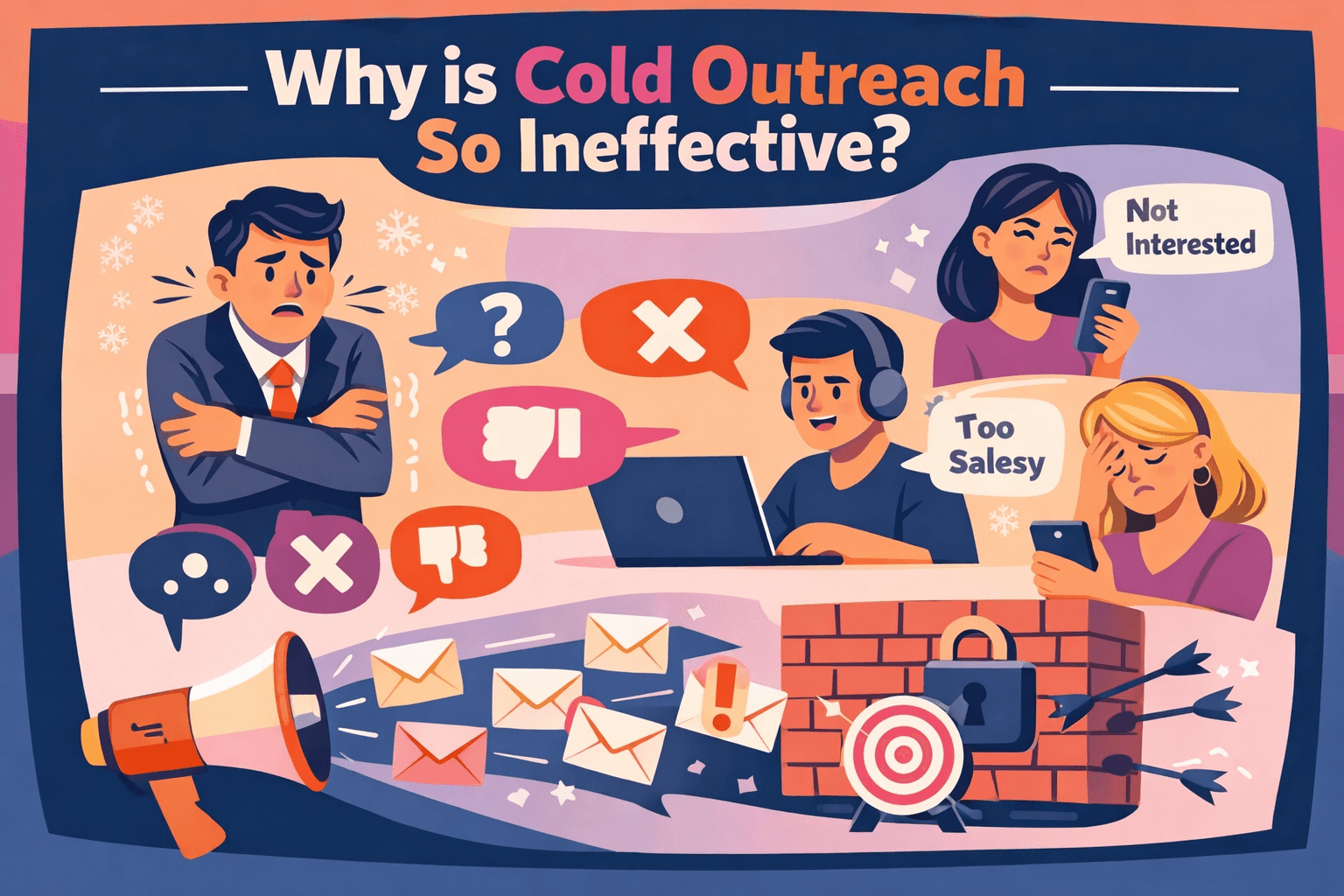
Cold outreach is ineffective because it often feels interruptive and irrelevant.
The main reasons include:
Messaging is too generic or templated
Prospects are not actively looking for a solution
There is no clear or compelling value
Outreach lacks personalization or context
Inboxes are crowded, and anything that doesn’t stand out gets ignored instantly.
Is Poor Targeting the Core Problem?
Yes—most cold outreach fails before the message is even sent.
If you’re targeting:
The wrong industry
The wrong company size
The wrong decision-maker
Then even a well-written message won’t convert.
Better targeting = higher baseline response rates.
Why Does Generic Messaging Kill Response Rates?
Generic outreach signals low effort and low relevance.
Examples of ineffective messaging:
“We help businesses grow faster”
“Just checking if you’re interested…”
These fail because they:
Don’t address a specific problem
Don’t show understanding of the prospect
Don’t differentiate from competitors
Personalized, context-aware messages outperform generic ones by a wide margin.
How Does Timing Affect Cold Outreach?
Timing is one of the most overlooked factors.
Even ideal prospects won’t respond if:
They’re not experiencing the problem yet
Budget cycles don’t align
The initiative isn’t a priority
This is why intent-based outreach consistently outperforms cold lists.
How to Fix Cold Outreach (Step-by-Step)
Step 1: Narrow Your Targeting
Focus only on high-fit prospects that match your ICP.
Refine by:
Industry and company size
Role and seniority
Known pain points
Smaller, more targeted lists outperform large generic ones.
Step 2: Lead With Relevance
Your first line should immediately answer: “Why me?”
Examples:
“Saw your team is hiring SDRs—quick idea to improve ramp time…”
“Noticed you’re expanding into APAC…”
This shows the message is tailored, not automated.
Step 3: Focus on One Clear Outcome
Avoid overwhelming prospects with multiple benefits.
Instead:
Identify one problem
Present one solution
Highlight one measurable result
Clarity increases engagement.
Step 4: Improve Your Offer
Most outreach fails because the “ask” is too big or too vague.
Weak offer:
“Can we book a 30-minute call?”
Stronger offer:
“Happy to share a quick benchmark for your team”
Make the value immediate and low-risk.
Step 5: Use Multi-Touch Sequences
One message is rarely enough.
Effective outreach includes:
3–5 follow-ups
Multiple channels (email, LinkedIn, calls)
New value in each touchpoint
Persistence (done right) increases reply rates significantly.
What Makes Cold Outreach Actually Work?
Cold outreach works when it feels warm and relevant, not cold.
High-performing outreach:
Targets the right people
Uses context and personalization
Aligns with real business problems
Offers clear, immediate value
It’s less about selling and more about starting a relevant conversation.
Common Cold Outreach Mistakes to Avoid
Sending mass emails with no personalization
Writing long, unfocused messages
Talking about your product instead of outcomes
Ignoring follow-ups
Reaching out without timing or intent signals
Fixing these can dramatically improve performance.
Frequently Asked Questions
Is cold outreach still effective in 2026?
Yes—but only when it is highly targeted, personalized, and intent-driven. Generic outreach is increasingly ineffective.
What is a good response rate for cold outreach?
Typical response rates range from 3–10%, but highly targeted campaigns can exceed this.
How can I make cold outreach feel less “cold”?
Use personalization, reference real context, and lead with value instead of a sales pitch.
Key Takeaway
Cold outreach is ineffective when it feels like spam. It becomes effective when it is relevant, timely, and valuable. The goal is not to reach more people—it’s to reach the right people with the right message at the right moment.