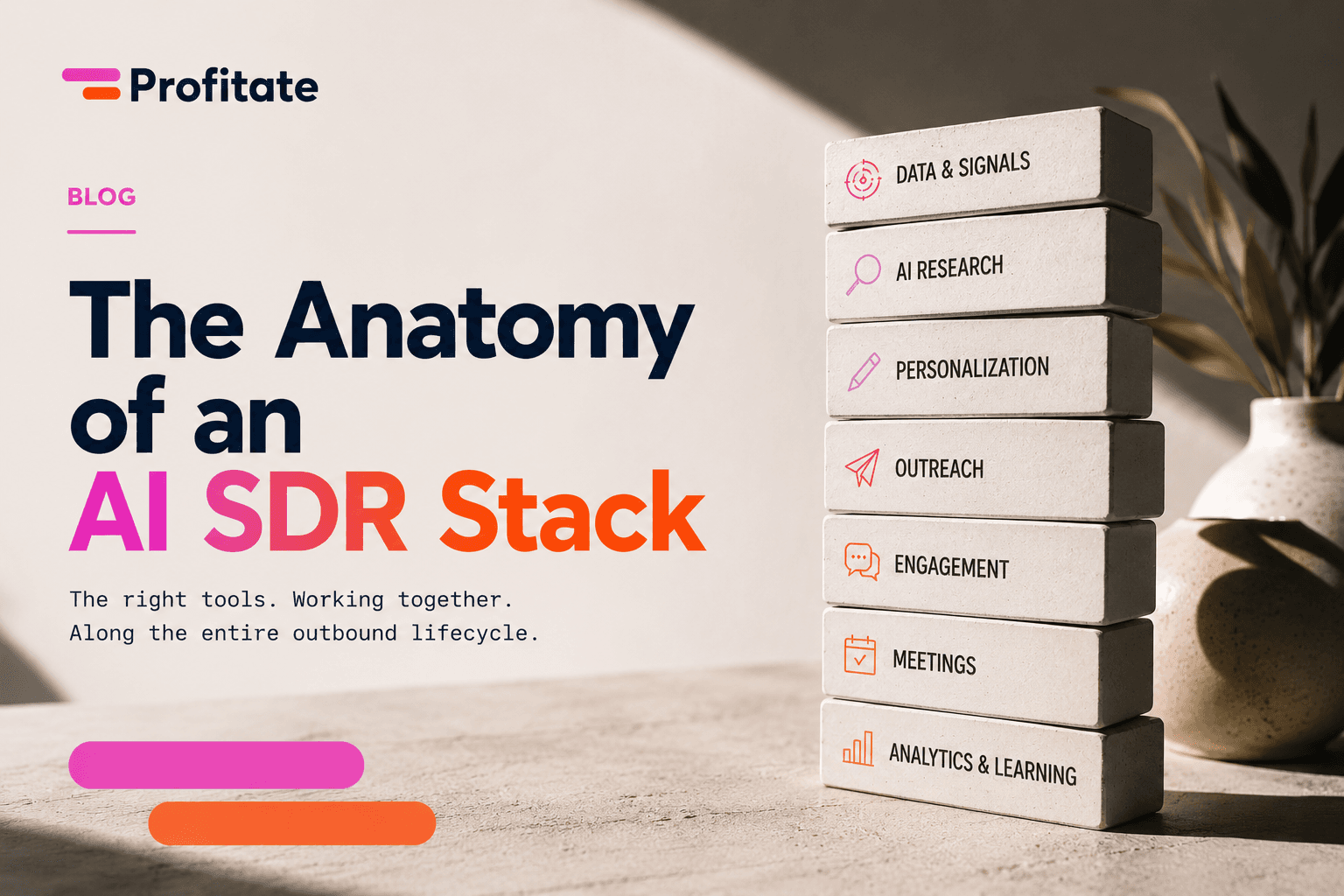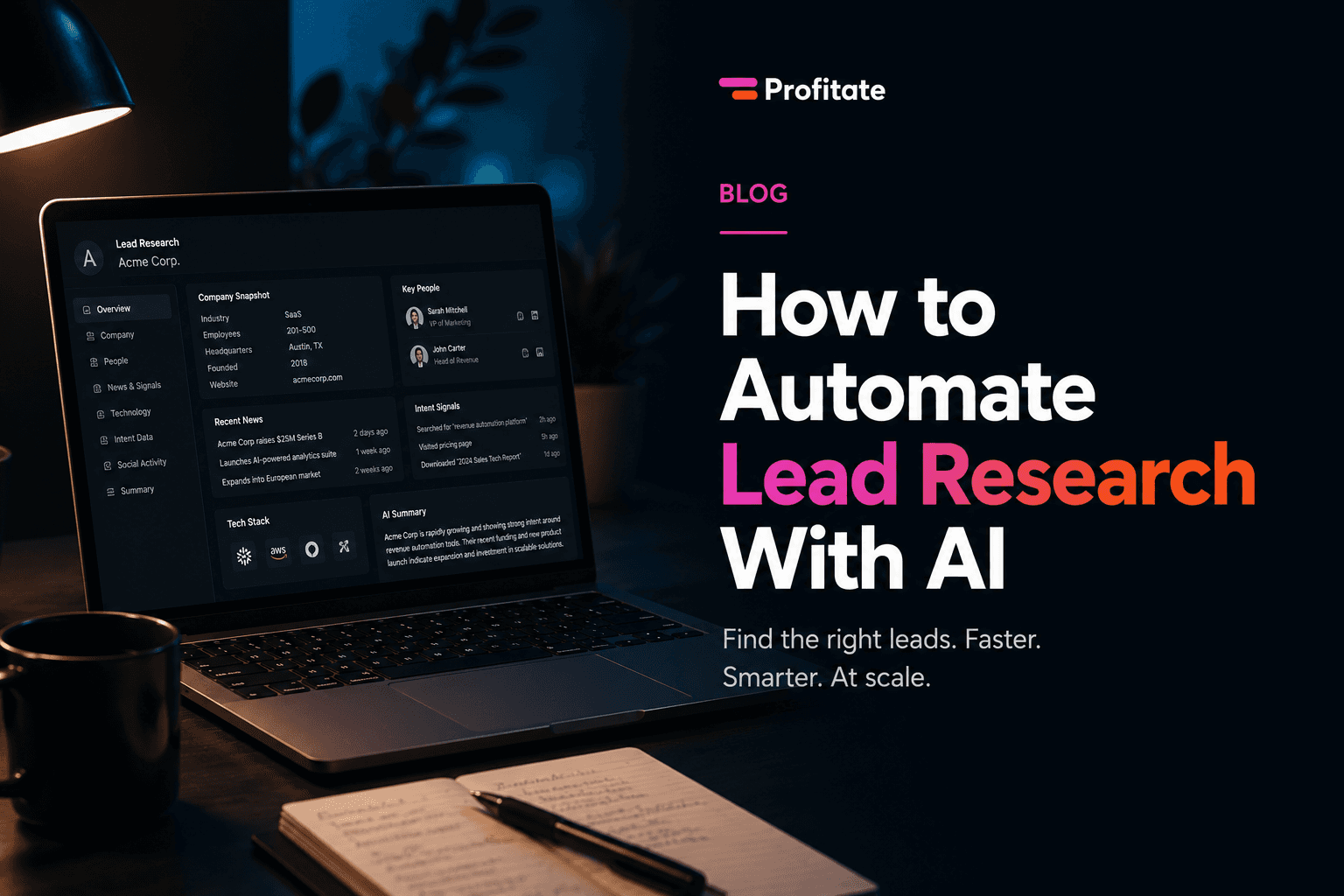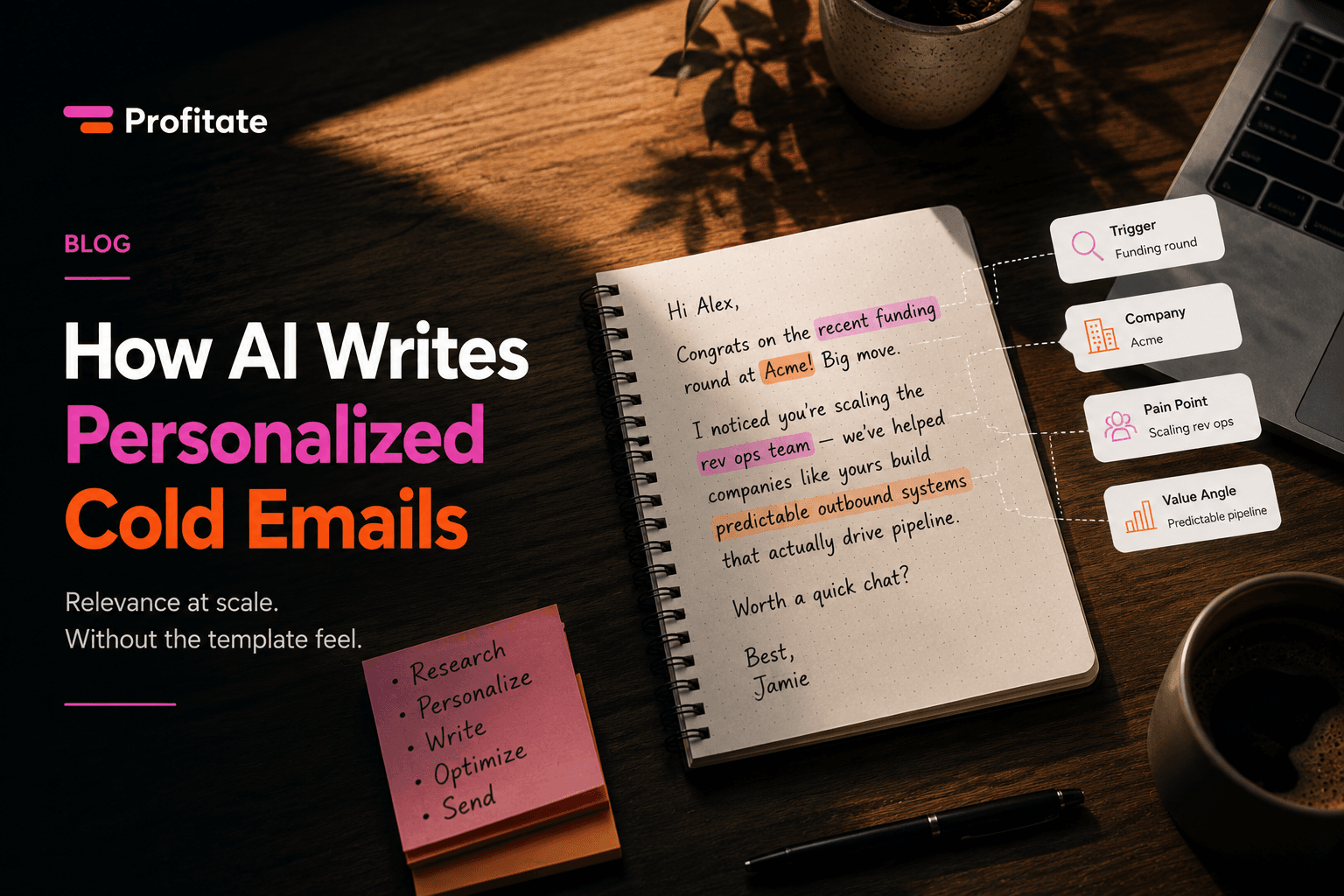
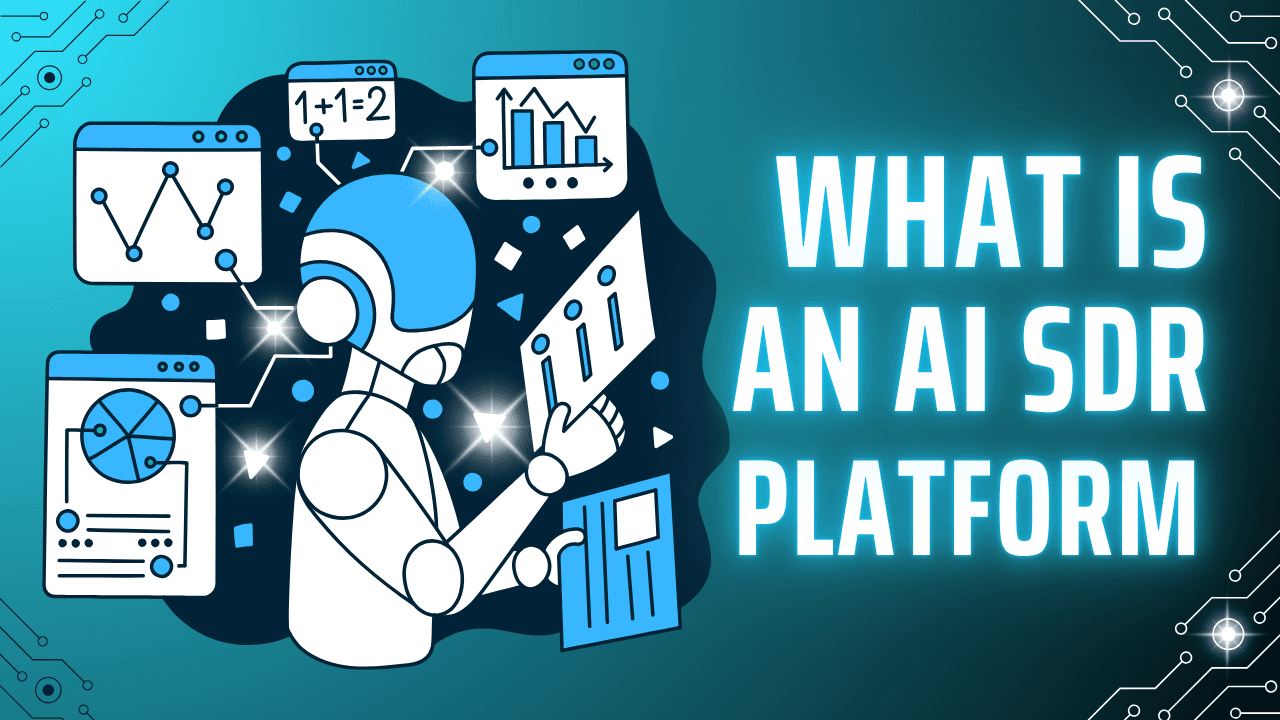
TL;DR: An AI SDR platform is software that uses artificial intelligence to automate many of the tasks traditionally performed by Sales Development Representatives (SDRs). These platforms identify prospects, monitor buying signals, research accounts, personalize outreach, manage follow-ups, and qualify leads at scale. The goal is to help sales teams generate more pipeline while reducing the manual workload associated with outbound prospecting.
What Is an AI SDR Platform?
An AI SDR (Artificial Intelligence Sales Development Representative) platform is a technology solution designed to automate and optimize outbound sales activities.
Traditionally, SDRs spend significant time:
Building prospect lists
Researching companies
Finding contact information
Writing outreach emails
Managing follow-up sequences
Qualifying leads
AI SDR platforms automate much of this process using machine learning, natural language processing, and real-time data analysis.
Instead of acting as a replacement for sales teams, most AI SDR platforms function as a force multiplier, allowing SDRs to focus on conversations and relationship-building rather than administrative work.
How Does an AI SDR Platform Work?
AI SDR platforms typically follow a structured workflow designed to identify and engage potential buyers.
Step 1: Identify Target Accounts
The platform analyzes data to find companies that match an organization's Ideal Customer Profile (ICP).
Common criteria include:
Industry
Company size
Revenue
Employee growth
Geographic location
Technology stack
This allows sales teams to focus on the most relevant opportunities.
Step 2: Detect Buying Signals
Modern AI SDR platforms continuously monitor signals that indicate potential buying intent.
Examples include:
Funding announcements
Hiring activity
Executive hires
Product launches
Technology adoption
Website engagement
Signal-based prospecting helps sales teams reach prospects when they are most likely to engage.
Step 3: Research Prospects Automatically
AI gathers information from multiple sources, including:
Company websites
LinkedIn profiles
Industry publications
News articles
Public databases
This creates a detailed prospect profile without requiring manual research.
Step 4: Generate Personalized Outreach
Using collected data and buying signals, AI creates personalized messaging tailored to individual prospects.
For example, outreach may reference:
Recent company growth
Leadership changes
Expansion initiatives
Industry challenges
This helps outreach feel relevant rather than generic.
Step 5: Automate Follow-Ups
AI SDR platforms can automatically send follow-up emails and messages based on prospect engagement.
This ensures opportunities are not lost due to inconsistent follow-up.
Step 6: Prioritize High-Intent Leads
Many platforms use predictive scoring models to rank prospects based on their likelihood of converting.
This enables sales teams to focus their efforts on the highest-value opportunities.
What Features Are Included in an AI SDR Platform?
While capabilities vary between vendors, most AI SDR platforms include some combination of the following features:
Feature | Purpose |
|---|---|
Lead Discovery | Find potential prospects automatically |
Contact Enrichment | Gather accurate contact information |
Buying Signal Detection | Identify sales opportunities in real time |
AI Personalization | Generate customized outreach |
Email Automation | Launch and manage sequences |
Lead Scoring | Prioritize prospects by intent |
CRM Integration | Sync prospect and engagement data |
Analytics & Reporting | Measure campaign performance |
The most advanced platforms combine multiple capabilities into a single workflow.
AI SDR Platform vs Traditional Sales Development
Traditional SDR Workflow | AI SDR Platform Workflow |
|---|---|
Manual prospect research | Automated prospect discovery |
Static lead lists | Dynamic signal-based targeting |
Personalized outreach requires significant time | Personalization at scale |
Manual follow-up management | Automated follow-up sequences |
Human-driven lead prioritization | AI-powered lead scoring |
Limited prospect coverage | Large-scale prospect coverage |
The key advantage of AI is efficiency. Tasks that previously consumed hours can often be completed in minutes.
What Are the Benefits of Using an AI SDR Platform?
Increased Prospecting Efficiency
AI dramatically reduces the time spent on research and list building.
Better Timing
Signal-based targeting allows outreach during periods of growth, change, or buying intent.
Scalable Personalization
Sales teams can personalize thousands of messages without increasing workload.
Improved Lead Quality
AI helps prioritize accounts that closely match ideal customer profiles.
More Pipeline Generation
By automating repetitive tasks, sales teams can engage more opportunities and generate more meetings.
Can an AI SDR Platform Replace Human SDRs?
For most businesses, the answer is no.
AI SDR platforms are excellent at:
Research
Data analysis
Signal detection
Personalization
Automation
Human SDRs remain stronger at:
Building trust
Managing complex conversations
Handling objections
Negotiating value
Creating relationships
The most successful sales organizations use AI to support SDRs rather than replace them.
What Types of Companies Use AI SDR Platforms?
AI SDR platforms are particularly valuable for organizations that rely on outbound sales.
Common users include:
SaaS companies
Technology vendors
Recruitment agencies
Marketing agencies
Consulting firms
Financial services providers
Professional services businesses
Any company with a repeatable outbound sales process can potentially benefit from AI-powered prospecting.
Frequently Asked Questions
What does SDR stand for?
SDR stands for Sales Development Representative. An SDR is responsible for identifying, engaging, and qualifying potential customers before passing opportunities to account executives or sales teams.
Are AI SDR platforms only for large companies?
No. Many small and mid-sized businesses use AI SDR platforms to scale outbound sales without significantly increasing headcount.
What is the biggest advantage of an AI SDR platform?
The ability to automate prospect research, signal detection, personalization, and outreach while allowing sales teams to focus on conversations that generate revenue.
Conclusion
An AI SDR platform is a modern sales technology solution that automates many of the activities traditionally performed by Sales Development Representatives. By combining prospect discovery, buying signal detection, personalized outreach, lead scoring, and follow-up automation, these platforms help businesses generate more qualified pipeline with greater efficiency.
As outbound sales becomes increasingly data-driven, AI SDR platforms are evolving from optional tools into core components of modern revenue teams. Organizations that successfully combine AI automation with human relationship-building will be best positioned to scale pipeline generation and accelerate growth in 2026 and beyond.