TL;DR: An AI SDR stack is the set of tools, data, workflows, and rules that help sales teams automate outbound prospecting. A strong stack includes account data, buyer signals, contact enrichment, AI research, message generation, sequencing, reply handling, CRM routing, analytics, and human oversight.
What Is an AI SDR Stack?
An AI SDR stack is the technology and workflow system used to identify prospects, research accounts, personalise outreach, send sequences, classify replies, and route qualified opportunities to salespeople.
The goal is not simply to automate more emails. The goal is to help outbound teams contact better-fit accounts at better moments with more relevant messages.
A well-built AI SDR stack answers three questions:
Who should we contact?
Why should we contact them now?
What should we say?
What Are the Core Parts of an AI SDR Stack?
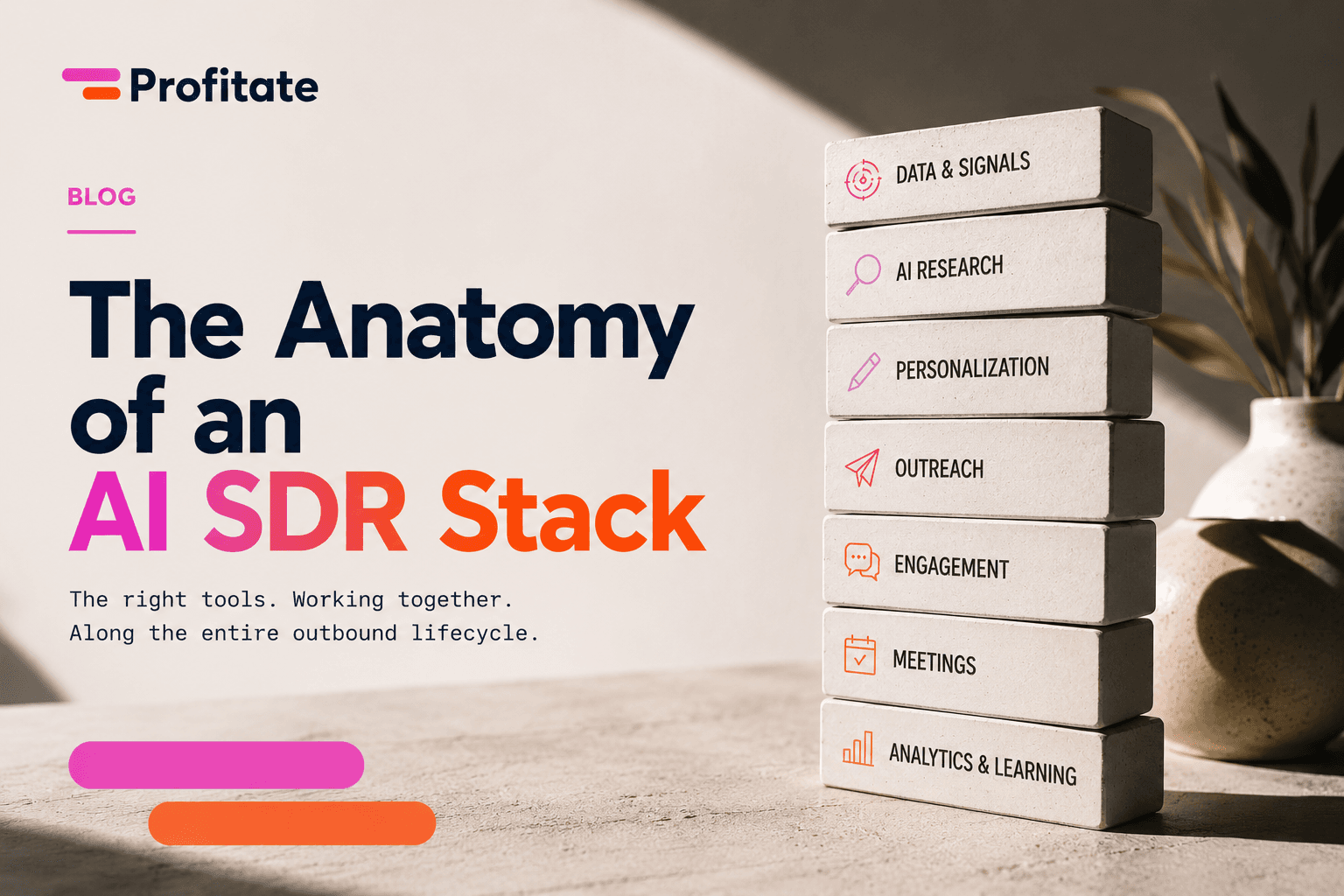
An AI SDR stack usually has several connected layers. Each layer supports a specific part of the outbound workflow, from account selection to meeting handoff.
Stack Layer | Purpose | Example Function |
|---|---|---|
Account data | Defines target companies | Industry, size, revenue, location |
Buyer signals | Identifies timing | Hiring, funding, website visits, LinkedIn activity |
Contact enrichment | Finds decision-makers | Job titles, emails, phone numbers |
AI research | Summarises account context | Recent news, pain points, growth signals |
Message generation | Creates personalised outreach | Email, LinkedIn, call scripts |
Sequencing | Automates follow-up | Multi-step outbound campaigns |
Reply handling | Classifies responses | Interest, objection, referral, unsubscribe |
CRM sync | Updates sales systems | Tasks, notes, lead status, ownership |
Analytics | Measures performance | Reply rates, meetings, conversions |
Why Is Data the Foundation of an AI SDR Stack?
Data is the foundation because every AI SDR workflow depends on accurate account and contact information. If the data is poor, the AI will target the wrong companies, contact the wrong people, and generate irrelevant messages.
The most important data sources include firmographic data, technographic data, contact data, CRM history, website activity, and buyer signals. These inputs help the system understand whether an account is a good fit and whether there is a timely reason to reach out.
How Do Buyer Signals Power the Stack?
Buyer signals tell the AI SDR system when to act. Instead of sending outreach to every account in a database, the system can prioritise companies showing signs of growth, change, research, or urgency.
Strong signals include:
Funding announcements
New leadership hires
Department growth
Job postings
Pricing page visits
Product page engagement
Competitor research
Technology changes
LinkedIn activity
A signal becomes more valuable when it connects directly to a problem your product solves.
Where Does AI Personalisation Fit?
AI personalisation sits between research and outreach. The system reviews account data and buyer signals, then turns them into a relevant message.
Weak personalisation says, “I saw your company is growing.” Strong personalisation explains what that growth may create: hiring pressure, reporting complexity, pipeline gaps, onboarding challenges, or operational inefficiency.
The best AI SDR stacks use message rules, approved value propositions, customer proof points, and human-reviewed templates to keep outreach accurate and on-brand.
What Happens After Outreach Starts?
After outreach begins, the AI SDR stack manages follow-up, tracks engagement, and classifies replies. It may pause sequences when someone responds, update CRM records, assign tasks to reps, or route positive replies to an account executive.
This stage is critical because AI should not create confusion inside the sales process. Every reply should have a clear next step, owner, and status.
What Makes an AI SDR Stack Effective?
An effective AI SDR stack combines automation with control. It should increase relevance, not just volume. The best systems have clear ICP rules, accurate data, strong signal logic, approved messaging, compliance safeguards, and defined human handoff points.
The stack should be judged by qualified conversations and pipeline created, not by the number of emails sent.
Frequently Asked Questions
What tools are in an AI SDR stack?
An AI SDR stack typically includes sales intelligence tools, contact enrichment, intent data, AI research tools, sequencing platforms, CRM systems, reply classification, analytics, and meeting routing.
Does an AI SDR stack replace human SDRs?
No. An AI SDR stack automates repetitive prospecting tasks, but human salespeople still manage strategy, judgement, complex conversations, qualification, and relationship-building.
What is the most important part of an AI SDR stack?
The most important part is the signal and data layer. Without accurate targeting and relevant triggers, AI-generated outreach becomes generic automation.
How should companies measure an AI SDR stack?
Companies should measure reply quality, meeting conversion, pipeline created, account fit, positive response rate, and handoff accuracy. Volume alone is not a useful success metric.