
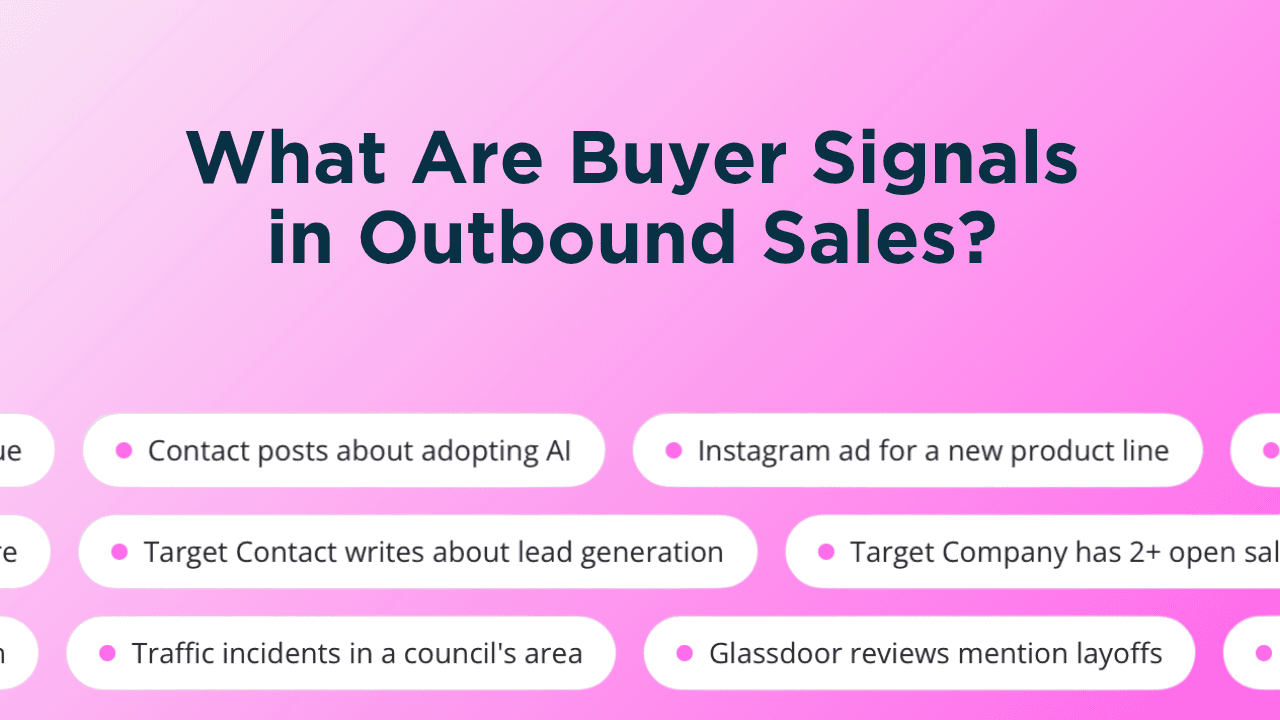
TL;DR: Buyer signals are behaviors, actions, or indicators that suggest a prospect may be interested in purchasing a product or service. In outbound sales, identifying buyer signals helps sales teams prioritize the right prospects, personalize outreach, and improve conversion rates. Common buyer signals include website visits, content engagement, job changes, funding announcements, hiring activity, and direct responses to outreach.
Buyer signals are one of the most valuable data points in modern outbound sales because they help sales representatives focus on prospects who are more likely to buy rather than relying solely on cold outreach.
What Is a Buyer Signal in Outbound Sales?
A buyer signal is any observable action or event that indicates a prospect may have a need, problem, or interest related to your solution.
These signals help sales teams identify the right timing for outreach. Instead of contacting prospects randomly, reps can engage when there is evidence that a buying process may be starting.
Examples of buyer signals include:
Visiting your pricing page
Downloading a whitepaper or guide
Opening multiple sales emails
Attending a webinar
Hiring for relevant positions
Receiving new funding
Expanding into new markets
Changing technology providers
Engaging with company content on LinkedIn
The stronger the signal, the higher the likelihood that the prospect is actively evaluating solutions.
Why Are Buyer Signals Important for Outbound Sales?
Buyer signals allow sales teams to prioritize outreach based on intent rather than assumptions.
Key benefits include:
Higher response rates
Better meeting conversion rates
More personalized messaging
Improved sales efficiency
Shorter sales cycles
Increased revenue per sales representative
Companies that use buyer intent data often outperform competitors because they engage prospects at the right moment in their buying journey.
What Types of Buyer Signals Should Sales Teams Monitor?
1. Intent Signals
Intent signals indicate active research or buying behavior.
Examples include:
Visiting product pages
Comparing vendors
Searching for solution-related keywords
Downloading educational resources
Reviewing pricing information
These are often considered the strongest indicators of purchase intent.
2. Company Signals
Company-level changes often create new business needs.
Examples include:
Buyer Signal | Why It Matters |
|---|---|
New funding round | Increased budget availability |
Rapid hiring | Business growth and scaling |
Expansion into new markets | New operational challenges |
Mergers or acquisitions | Technology and process changes |
Leadership changes | New strategic priorities |
These events frequently trigger new purchasing decisions.
3. Engagement Signals
Engagement signals show direct interaction with your brand.
Examples include:
Email opens and replies
Webinar attendance
Social media engagement
Content downloads
Demo requests
The more engagement a prospect demonstrates, the stronger the buying signal becomes.
4. Technographic Signals
Technographic signals reveal changes in a company's technology stack.
Examples include:
Adoption of complementary software
Replacement of competing tools
New integrations
Infrastructure upgrades
These signals help sales teams identify organizations likely to benefit from their solution.
How Can Sales Teams Use Buyer Signals Effectively?
Step 1: Identify Relevant Signals
Not every signal has equal value. Focus on indicators that historically correlate with closed deals.
Step 2: Score and Prioritize Prospects
Assign scores based on signal strength. A pricing page visit may be more valuable than a blog page visit.
Step 3: Personalize Outreach
Reference the buyer signal directly when possible.
For example:
"I noticed your team is hiring several SDRs. Many growing sales organizations use our platform to improve onboarding and productivity."
This approach feels more relevant than generic cold outreach.
Step 4: Act Quickly
Buyer signals lose value over time. The sooner a sales representative engages, the more likely the conversation will be relevant.
What Are the Strongest Buyer Signals in 2026?
The highest-converting buyer signals typically include:
Visiting pricing pages
Requesting product demos
Reviewing competitor alternatives
Recent funding announcements
Executive leadership changes
Large-scale hiring initiatives
Technology migration projects
Multiple website visits within a short period
These signals often indicate active evaluation and buying intent.
Frequently Asked Questions
What is the difference between a buyer signal and buyer intent?
Buyer intent refers to the likelihood that someone wants to purchase. A buyer signal is the observable action that suggests that intent exists.
Are buyer signals only useful for B2B sales?
No. Buyer signals are valuable in both B2B and B2C environments. However, they are particularly effective in B2B outbound sales where timing and personalization significantly impact results.
Can outbound sales succeed without buyer signals?
Yes, but it is generally less efficient. Buyer signals help sales teams focus on prospects who are more likely to engage, reducing wasted effort and improving conversion rates.
Conclusion
Buyer signals are measurable indicators that help outbound sales teams identify prospects who may be ready to buy. By tracking intent, engagement, company, and technographic signals, organizations can prioritize the right opportunities, deliver more relevant outreach, and significantly improve sales performance. In modern outbound sales, buyer signals are no longer a competitive advantage—they are a fundamental requirement for efficient pipeline generation.