TL;DR: AI prospecting uses artificial intelligence to automate lead research, identify buying signals, personalize outreach, and prioritize prospects at scale. Traditional prospecting relies heavily on manual research, static lead lists, and human-driven outreach. While traditional prospecting can be effective, AI prospecting enables sales teams to work faster, target more accurately, and generate more qualified opportunities with fewer resources.
What Is AI Prospecting?
AI prospecting is the process of using artificial intelligence to identify, research, qualify, and engage potential customers.
Rather than manually searching for prospects, AI analyzes large volumes of data to uncover companies and decision-makers that match an ideal customer profile. It can also monitor buying signals, generate personalized outreach, and continuously optimize prospecting campaigns.
The goal is simple: help sales teams spend less time finding leads and more time closing deals.
What Is Traditional Prospecting?
Traditional prospecting is the manual process of identifying and contacting potential customers.
Sales representatives typically:
Build prospect lists manually
Research companies and decision-makers
Write outreach messages
Make cold calls
Send follow-up emails
Qualify leads through direct conversations
While this approach has been the foundation of B2B sales for decades, it can be time-consuming and difficult to scale.
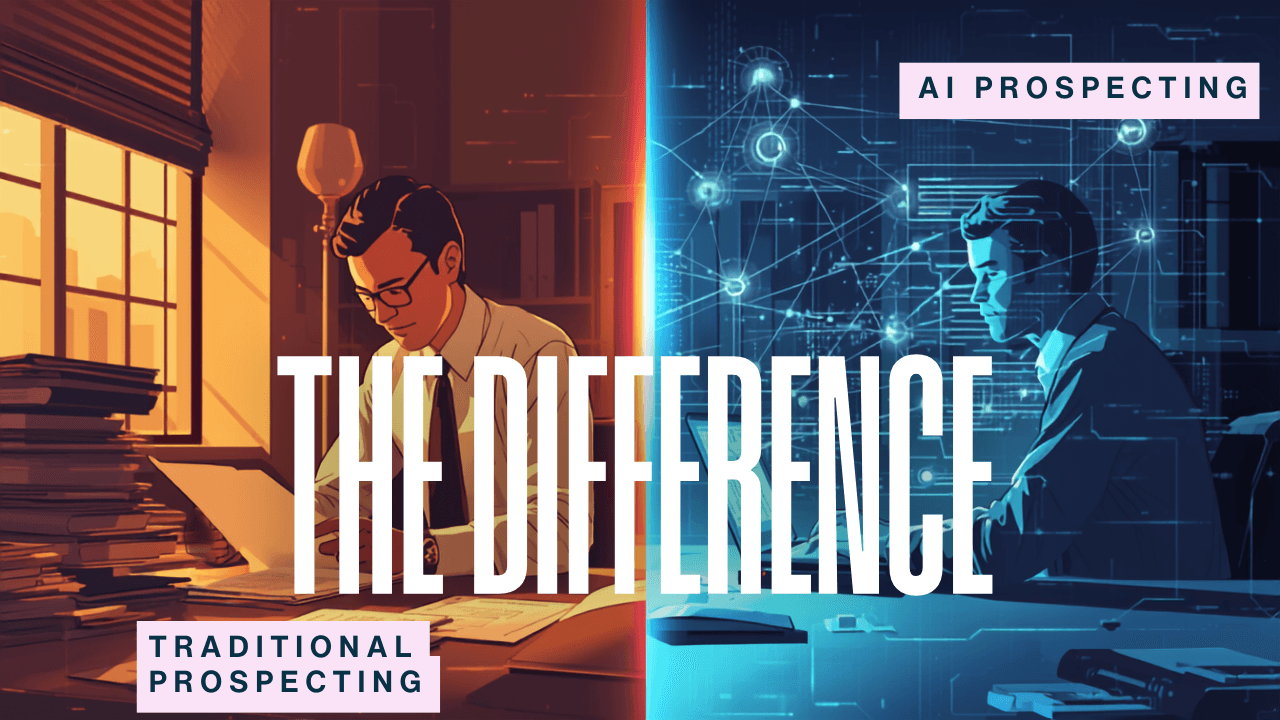
AI Prospecting vs Traditional Prospecting: Key Differences
Category | AI Prospecting | Traditional Prospecting |
|---|---|---|
Lead Research | Automated | Manual |
Data Analysis | Real-time | Limited |
Personalization | Scalable | Time-intensive |
Buying Signal Detection | Automated | Manual monitoring |
Outreach Volume | High | Limited |
Follow-Up Management | Automated | Manual |
Efficiency | High | Moderate |
Human Input Required | Lower | Higher |
Scalability | Excellent | Limited |
Cost Per Prospect | Lower over time | Higher over time |
The primary difference is that AI allows businesses to process significantly more information and take action faster than a human sales team can manually.
How Traditional Prospecting Works
Traditional prospecting follows a relatively straightforward process.
Step 1: Build a Target List
Sales teams identify companies that fit their target market.
This may involve:
Industry research
LinkedIn searches
Purchased databases
Networking events
Step 2: Research Prospects
Representatives manually investigate:
Company size
Decision-makers
Business challenges
Recent company developments
Step 3: Conduct Outreach
Outreach typically includes:
Cold emails
Cold calls
LinkedIn messages
Networking introductions
Step 4: Follow Up
Sales representatives manually manage follow-up sequences and engagement.
While effective, this process often consumes a significant amount of time before meaningful conversations begin.
How AI Prospecting Works
AI prospecting follows a similar objective but uses automation throughout the process.
Step 1: Identify Ideal Prospects Automatically
AI analyzes thousands of businesses and identifies those matching specific criteria.
Examples include:
Industry
Revenue range
Employee count
Growth indicators
Technology stack
Step 2: Monitor Buying Signals
Unlike traditional prospecting, AI continuously watches for events that suggest purchasing intent.
Common signals include:
Hiring activity
Funding announcements
Executive hires
Technology adoption
Website engagement
Step 3: Generate Personalized Outreach
AI can create tailored outreach based on real-time company information.
This enables personalization at a scale that would be difficult for most sales teams to achieve manually.
Step 4: Optimize and Learn
AI systems analyze campaign performance and refine targeting and messaging based on outcomes.
Over time, prospecting becomes increasingly efficient.
Why AI Prospecting Is Becoming More Popular
The volume of available business data has increased dramatically.
Companies now generate signals across:
Websites
Social media
Hiring platforms
Review sites
Industry publications
Technology databases
Human sales teams cannot realistically monitor all of these sources.
AI can process this information continuously and surface opportunities as they emerge.
This creates a significant competitive advantage.
What Are the Benefits of AI Prospecting?
Faster Lead Discovery
AI can identify qualified prospects in minutes rather than hours.
Better Timing
Signal-based prospecting allows outreach when companies are actively experiencing change or growth.
Increased Personalization
AI creates contextual messaging based on real-world business events.
Higher Productivity
Sales representatives spend less time researching and more time engaging prospects.
Improved Pipeline Quality
By prioritizing high-intent accounts, AI helps generate more qualified opportunities.
Does Traditional Prospecting Still Have Value?
Absolutely.
Traditional prospecting remains valuable in situations that require:
Relationship-building
Enterprise account development
Complex sales cycles
Strategic conversations
Objection handling
Many successful organizations combine traditional sales skills with AI-powered prospecting tools.
The strongest results often come from using AI to identify and engage opportunities while allowing human sales professionals to manage conversations and build trust.
Frequently Asked Questions
Is AI prospecting replacing traditional prospecting?
Not entirely. AI is automating many prospecting tasks, but human sales professionals remain essential for relationship-building, qualification, and closing deals.
Is AI prospecting more effective than traditional prospecting?
For lead identification, research, and scalability, AI prospecting is generally more efficient. However, complex sales environments still benefit significantly from human expertise and interaction.
What types of businesses benefit most from AI prospecting?
B2B organizations with large target markets, outbound sales teams, and long sales cycles—including SaaS, technology, consulting, recruitment, and professional services firms—often see the greatest benefits.
Conclusion
The difference between AI prospecting and traditional prospecting comes down to scale, speed, and data utilization. Traditional prospecting relies on human effort to find and engage potential customers, while AI prospecting uses automation and machine learning to identify opportunities, monitor buying signals, and personalize outreach at scale.
As B2B sales continues to evolve, the most successful companies are not choosing between AI and traditional prospecting. They are combining the efficiency of AI with the relationship-building capabilities of experienced sales professionals. This hybrid approach delivers the best of both worlds: smarter prospecting and stronger customer relationships.