
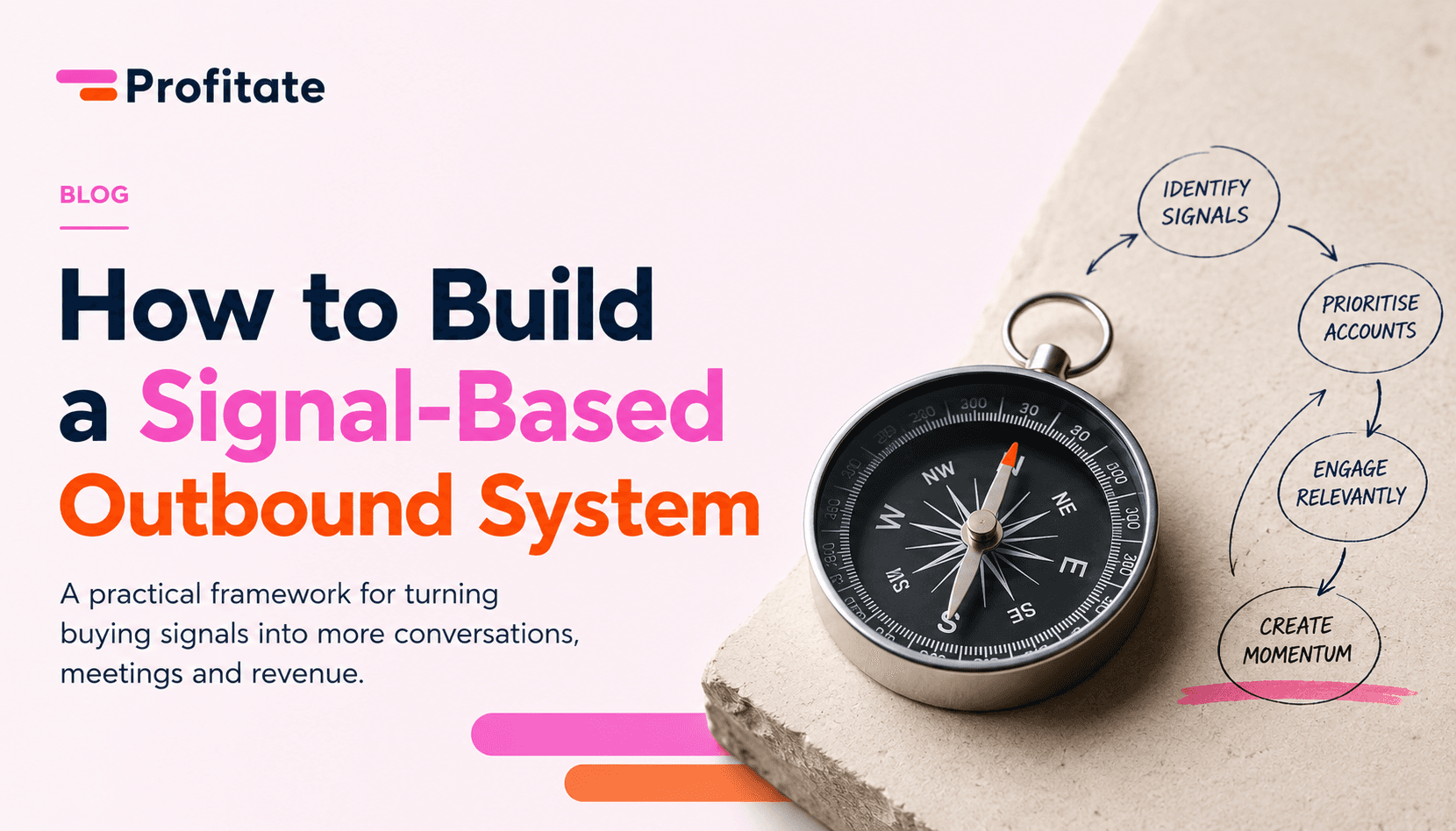
TL;DR: A signal-based outbound system uses real-time buyer signals to identify which companies to contact, why now, and what message to send. The strongest systems combine intent data, hiring signals, funding announcements, website activity, LinkedIn activity, technology changes, and firmographic fit into one repeatable prospecting workflow.
What Is a Signal-Based Outbound System?
A signal-based outbound system is a prospecting process that prioritises accounts based on meaningful business events and buyer behaviours. Instead of sending generic cold emails to large lists, sales teams use signals to contact prospects when there is a clear reason they may need a solution.
The core idea is simple: outbound works better when timing, relevance, and business context are built into the message.
A signal-based system helps answer three questions:
Which accounts should we contact?
Why should we contact them now?
What should our message say?
Why Does Signal-Based Outbound Work?
Signal-based outbound works because it replaces guesswork with evidence. Traditional outbound often relies on static data such as company size, industry, location, or job title. These details help define fit, but they do not show urgency.
Buyer signals add timing. They reveal when a company is growing, changing, researching, hiring, expanding, replacing tools, or dealing with a new operational challenge.
For example, a company that recently raised funding, hired a VP Sales, and posted five SDR roles is more likely to care about pipeline generation than a similar company with no active growth signals.
What Signals Should You Track?
The best outbound systems track multiple signal types, then rank them by relevance to your product.
Signal Type | What It Shows | Example Outbound Angle |
|---|---|---|
Website visits | Direct interest | “Teams exploring this topic often need…” |
Hiring activity | Growth or capability gaps | “Noticed you’re expanding the sales team…” |
Funding announcements | New budget and growth pressure | “Post-raise teams often need scalable systems…” |
LinkedIn activity | Current priorities | “Your recent growth update stood out…” |
Technology changes | New tools or replacement needs | “Companies using this stack often run into…” |
Leadership changes | Strategic review period | “New leaders often reassess processes…” |
Competitor research | Vendor evaluation | “Teams comparing options usually care about…” |
The strongest opportunity usually appears when several signals point to the same business problem.
How Do You Build the Workflow?
Start by defining your ideal customer profile. A signal only matters if the company is a good fit. Include company size, industry, geography, revenue stage, technology stack, and target personas.
Next, map each signal to a likely pain point. For example, hiring SDRs may indicate a need for sales engagement, data enrichment, onboarding, or pipeline visibility. Funding may indicate budget, expansion, and pressure to scale quickly.
Then create signal-based plays. Each play should include the trigger, target persona, outreach angle, proof point, and call to action. This turns signals into repeatable campaigns instead of one-off manual research.
How Should You Score Buyer Signals?
Signal scoring helps teams separate weak interest from strong buying intent. Score each account based on fit, signal strength, recency, frequency, and relevance.
A demo request from a target account should score higher than a single blog visit. A company hiring ten salespeople should score higher than a company posting one unrelated role. A funding announcement becomes stronger when combined with hiring, website visits, or leadership changes.
The goal is not to chase every signal. The goal is to prioritise the accounts most likely to have a current, solvable problem.
What Should the Outreach Message Include?
A strong signal-based outbound message includes four parts: the signal, the business hypothesis, the pain point, and the next step.
Example:
“I noticed your team is hiring several account executives after your recent funding round. Companies at this stage often need better pipeline visibility and faster rep ramp time. We help growing sales teams improve outbound execution without adding extra admin. Worth comparing how similar teams are handling this?”
This works because it connects timing to a relevant business problem.
Frequently Asked Questions
What is signal-based outbound?
Signal-based outbound is a sales prospecting approach that uses buyer signals to prioritise accounts and personalise outreach. It helps teams contact prospects when there is a timely reason to start a conversation.
What are the best outbound signals?
The best outbound signals include website visitor activity, hiring trends, funding announcements, leadership changes, LinkedIn activity, competitor research, and technology adoption.
How many signals should trigger outreach?
One strong signal can be enough, but two or three aligned signals usually create a better outbound opportunity.
What is the biggest mistake in signal-based outbound?
The biggest mistake is collecting signals without turning them into clear sales plays. Signals only create value when they improve targeting, timing, and messaging.