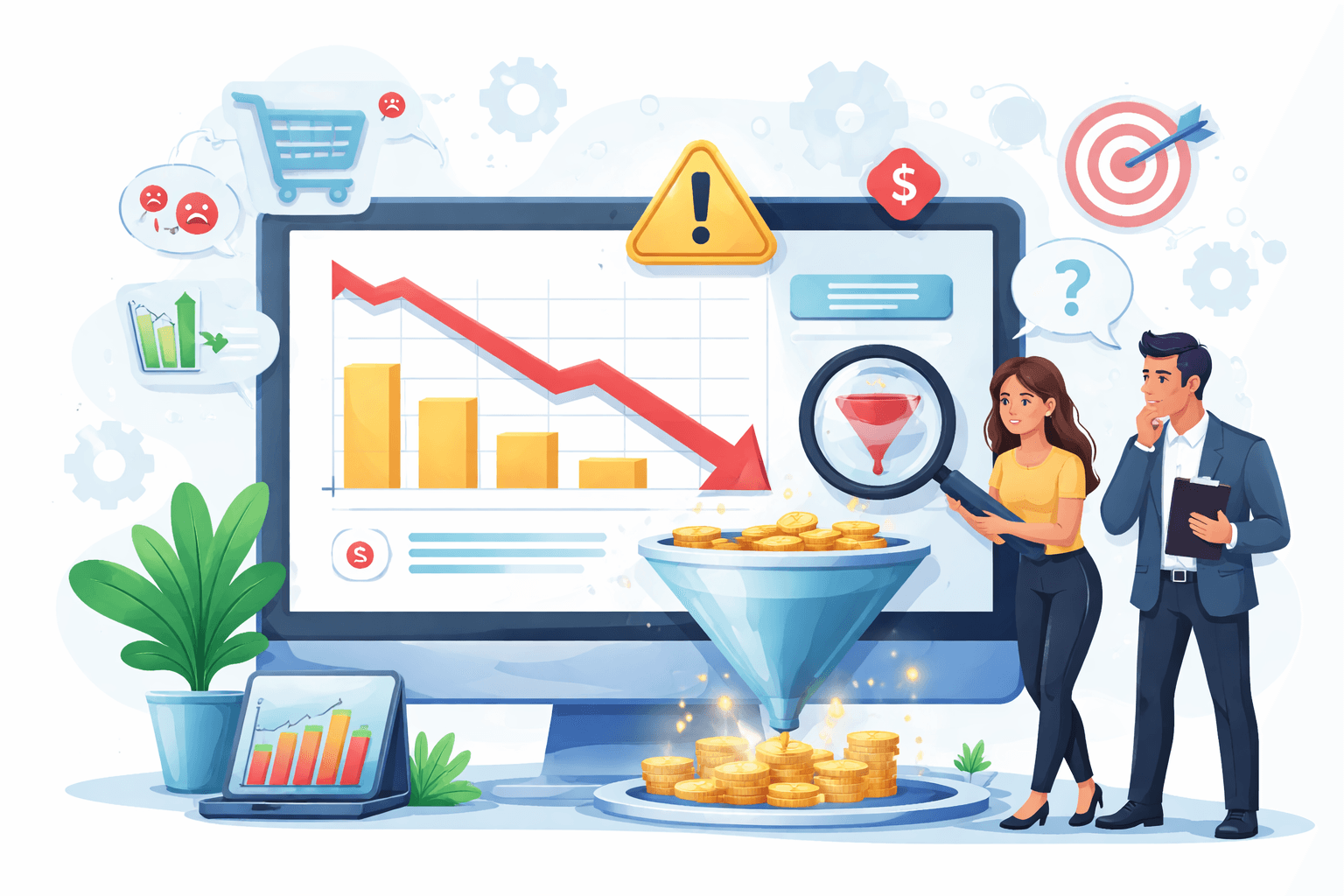
TL;DR / Summary:Conversion rates typically drop due to lower lead quality, misaligned messaging, increased competition, or funnel friction. Most often, the issue isn’t one thing—it’s a breakdown between targeting, intent, and experience. To fix it, you need to identify where conversions are leaking and optimize each stage systematically.
What Does a Drop in Conversion Rate Mean?
A declining conversion rate means a smaller percentage of your leads are:
Replying to outreach
Booking meetings
Becoming opportunities
Closing as customers
This usually indicates a mismatch between who you’re targeting, what you’re saying, and what buyers expect.
Why Do Conversion Rates Drop?
Conversion issues are rarely random—they are caused by changes in inputs or process.
The most common causes include:
Lower-quality or less relevant leads
Messaging that no longer resonates
Increased market competition
Friction in your funnel (e.g., slow response, complex steps)
Even small changes in any of these can significantly impact performance.
Is Lead Quality Getting Worse?
Often, yes—this is the #1 driver of declining conversions.
Signs:
More leads but fewer qualified opportunities
Increased no-shows or disengagement
Longer sales cycles
If your top-of-funnel quality drops, everything downstream suffers.
Has Your Messaging Become Less Effective?
Messaging can decay over time as markets evolve.
Common issues:
Overused or generic value propositions
Messaging not aligned with current buyer priorities
Lack of differentiation from competitors
What worked 6 months ago may no longer stand out today.
Is Funnel Friction Reducing Conversions?
Yes—small inefficiencies compound quickly.
Examples of friction:
Slow response times to inbound leads
Too many steps to book a meeting
Long or unclear sales processes
Even high-intent prospects will drop off if the experience is difficult.
How to Diagnose and Fix Conversion Drops (Step-by-Step)
Step 1: Identify Where the Drop Is Happening
Break down your funnel into stages:
Lead → reply
Reply → meeting
Meeting → opportunity
Opportunity → close
Find the exact stage where conversion rates declined.
Step 2: Audit Lead Quality
Compare current leads vs previous high-performing ones.
Look at:
ICP fit
Source/channel
Intent signals
If quality has dropped, refine targeting before fixing anything else.
Step 3: Refresh Your Messaging
Test new angles based on current market conditions.
Focus on:
Specific pain points
Measurable outcomes
Clear differentiation
Run A/B tests to identify what resonates now.
Step 4: Reduce Funnel Friction
Make it easier for prospects to convert.
Optimize:
Faster response times
Simpler booking processes
Clear next steps
Small UX improvements can significantly increase conversions.
Step 5: Re-Evaluate Your Offer
Sometimes the issue isn’t the message—it’s the offer.
Ask:
Is the value clear and compelling?
Is the ask too big (e.g., long demo too early)?
Can you reduce risk (e.g., free audit, trial)?
Stronger offers improve conversion at every stage.
What Metrics Should You Monitor?
Track conversion rates across the full funnel:
Lead → meeting conversion rate
Meeting → opportunity rate
Opportunity → close rate
Sales cycle length
These metrics help pinpoint exactly where performance is declining.
Common Causes of Conversion Decline
Expanding targeting too broadly
Over-relying on outdated messaging
Increased competition in your space
Poor follow-up or slow response times
Complex or high-friction sales processes
Fixing even one of these can reverse the trend.
Frequently Asked Questions
How quickly can I recover conversion rates?
You can often see improvements within weeks after fixing targeting, messaging, or funnel issues.
Should I focus on more leads or better conversion?
Better conversion. Increasing lead volume without fixing conversion just amplifies inefficiency.
Can seasonality affect conversion rates?
Yes—buyer behavior changes throughout the year, impacting timing and responsiveness.
Key Takeaway
Falling conversion rates are a signal—not a mystery. They indicate a misalignment between targeting, messaging, and buyer expectations. By diagnosing where the drop occurs and systematically improving each stage, you can restore and even improve your overall performance.