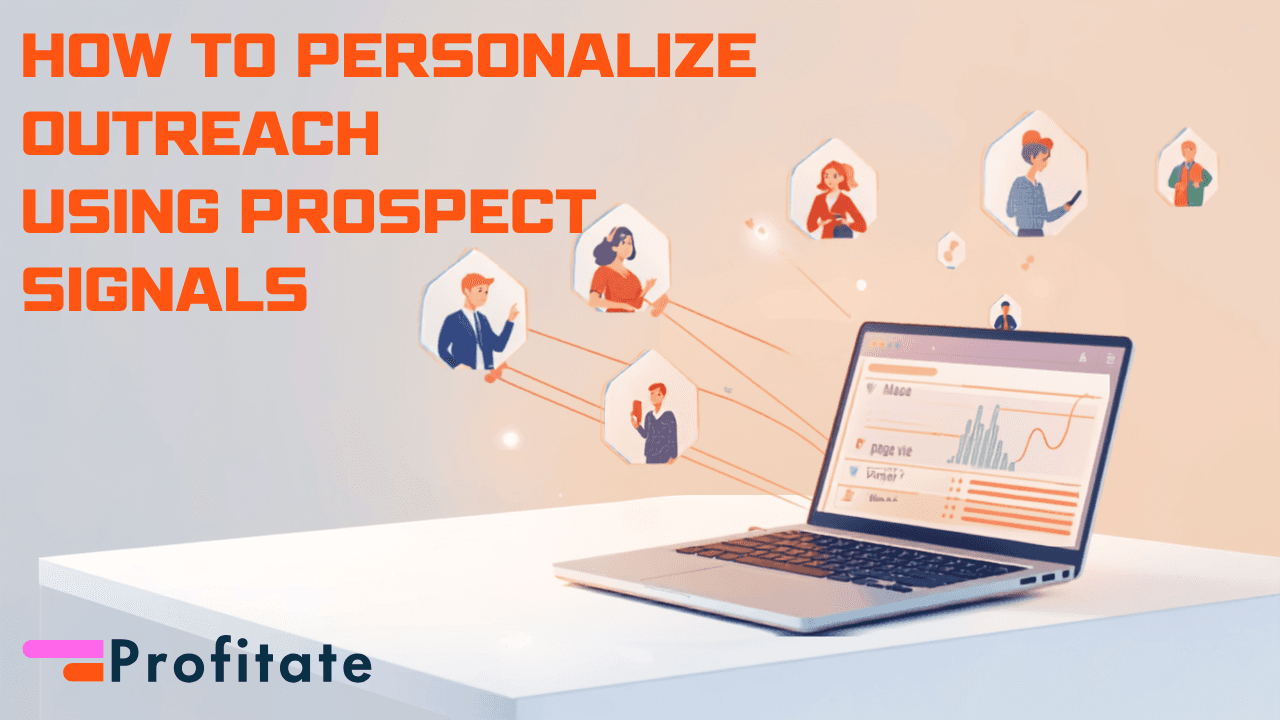
TL;DR: Prospect signals are real-time indicators that reveal what a potential customer is doing, planning, or prioritizing. By using AI to identify and interpret these signals, businesses can personalize outreach based on genuine business context rather than guesswork. The most effective outreach connects a relevant signal to a specific business challenge and explains how your solution can help.
Prospect signals help answer one critical question before sending an email: "Why should this person care about hearing from us today?"
What Are Prospect Signals?
Prospect signals are observable events or behaviors that suggest a company may be experiencing change, evaluating solutions, or preparing to make a purchasing decision.
Unlike static information such as company size or industry, prospect signals provide timely context that helps businesses engage prospects when outreach is most relevant.
Common prospect signals include:
Hiring activity
Funding announcements
Product launches
Executive appointments
Company expansion
Technology adoption
Website engagement
Content downloads
Webinar registrations
Pricing page visits
Industry awards
New partnerships
Press releases
Regulatory or market changes
These signals help AI generate outreach that is timely, personalized, and aligned with a prospect's current priorities.
Why Prospect Signals Improve Personalization
Traditional personalization often relies on basic details like a recipient's name, job title, or company.
Prospect signals provide a much richer level of context.
For example, instead of opening with:
"I noticed you're the Head of Operations."
AI can generate:
"Congratulations on expanding your operations team. Companies growing at this pace often face challenges maintaining consistent internal processes as headcount increases."
The second example immediately establishes relevance because it reflects a recent business event rather than generic information.
Which Prospect Signals Are Most Valuable?
Not every signal indicates buying intent. The most valuable signals suggest that a business is undergoing change or actively evaluating solutions.
Examples include:
Prospect Signal | Personalization Opportunity |
|---|---|
New funding | Discuss scaling operations or growth initiatives |
Hiring surge | Address onboarding, productivity, or automation |
Product launch | Explore customer support or sales enablement |
Executive hire | Align with strategic priorities and transformation |
Website pricing page visits | Offer product comparisons or demonstrations |
Webinar attendance | Continue the conversation around the topic of interest |
Technology implementation | Position integrations or workflow improvements |
Company expansion | Address operational efficiency and scalability |
The stronger the signal, the easier it becomes to explain why your outreach is relevant.
How AI Uses Prospect Signals
AI can analyze multiple data sources simultaneously to identify meaningful opportunities for outreach.
Typical workflow:
Detect a new prospect signal.
Gather supporting company information.
Identify likely business challenges.
Match those challenges to relevant solutions.
Generate personalized messaging.
Recommend the optimal timing for outreach.
Instead of simply reporting facts, AI transforms signals into conversation starters that feel informed and valuable.
Example: Personalizing Outreach Using Prospect Signals
Imagine a software company notices that a prospect has recently announced plans to hire 50 new customer support representatives.
Rather than sending a generic sales email, AI could generate something like:
Subject: Supporting your customer support expansion
Hi Sarah,
I noticed your team is expanding customer support following your recent hiring announcement. Companies growing support operations often face challenges maintaining response quality while onboarding new staff.
We've helped customer service teams use AI to automate repetitive enquiries and reduce onboarding time without compromising customer experience.
Would you be open to a brief conversation to explore whether this could support your growth plans?
This message is personalized because it connects a real business event to a likely operational challenge.
Where Can Prospect Signals Come From?
Businesses typically combine several sources to build a complete view of each prospect.
Common sources include:
CRM systems
Marketing automation platforms
Website analytics
Public company announcements
News articles
Press releases
LinkedIn company updates
Job boards
Technology intelligence platforms
Sales intelligence tools
Webinar and event platforms
Product usage analytics
Combining multiple sources allows AI to create more accurate and meaningful personalization.
Best Practices for Using Prospect Signals
To maximize the effectiveness of signal-based outreach:
Prioritize recent signals over older information.
Focus on business events rather than personal details.
Verify that signals are accurate before outreach.
Connect each signal to a relevant business challenge.
Keep messages concise and conversational.
Avoid forcing personalization where no meaningful signal exists.
Continuously refresh prospect data to maintain relevance.
Successful personalization is driven by quality insights, not the number of signals collected.
Common Mistakes to Avoid
Many organizations collect prospect signals but fail to use them effectively.
Avoid these common mistakes:
Referencing outdated announcements.
Mentioning every signal in one email.
Making unsupported assumptions about company priorities.
Personalizing around irrelevant information.
Overloading messages with research instead of value.
Failing to explain why the signal matters.
A single, meaningful insight often creates a stronger impression than a long list of observations.
Frequently Asked Questions
What are prospect signals in sales?
Prospect signals are observable business events or behaviors that indicate a company may be ready for a sales conversation. Examples include funding rounds, hiring activity, product launches, website engagement, and technology adoption.
How does AI identify prospect signals?
AI analyzes data from CRM systems, public company information, marketing platforms, website analytics, sales intelligence tools, and other trusted sources to detect changes that may indicate buying intent or business transformation.
Which prospect signals are the strongest buying indicators?
High-intent signals often include pricing page visits, demo requests, rapid hiring, funding announcements, executive appointments, product launches, and repeated engagement with educational content. These events frequently suggest that a company is evaluating new solutions.
Should every cold email include a prospect signal?
No. Prospect signals should only be used when they add genuine relevance. If no meaningful signal exists, it is better to personalize around industry trends, business challenges, or company goals than to force weak or irrelevant personalization.
Key Takeaway
Prospect signals enable businesses to personalize outreach based on real business events instead of generic templates or superficial details. By combining AI with accurate, up-to-date signals such as hiring activity, funding announcements, website engagement, and product launches, sales teams can deliver timely, relevant messages that resonate with decision-makers. The result is more meaningful conversations, stronger engagement, and higher reply rates because every email answers the prospect's most important question: "Why is this relevant to my business right now?"